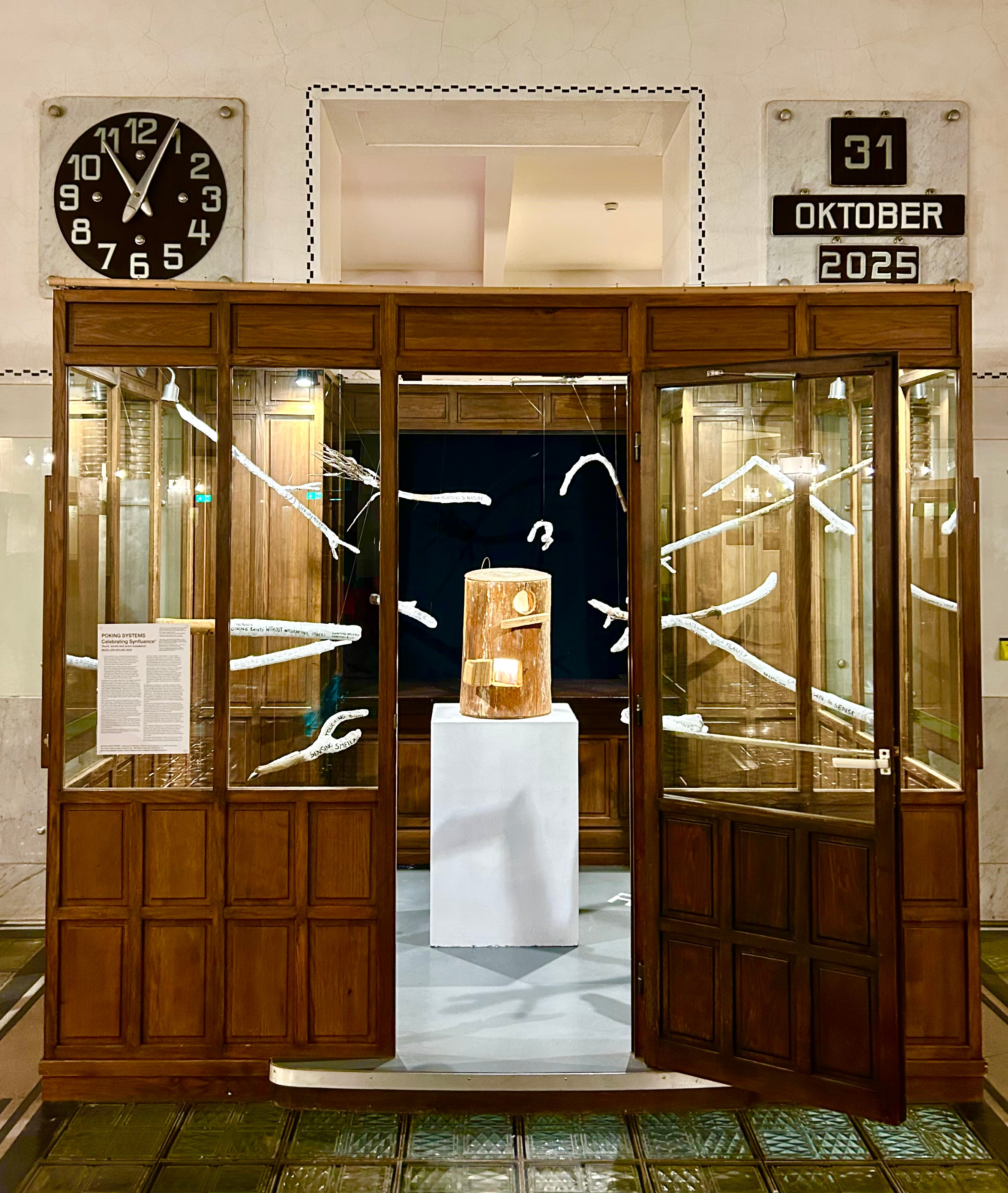
This multisensory installation offers an instant sensual glimpse into the research process, and possibly pokes awareness
concerning living systems.It is not possible to rule, to dominate living systems such as animals and human
animals, oceans and rivers, societies and cities, organizations and governments, jungles and forests, schools and universities,
national and international economies, climate and the biosphere, in the long term through linear, mechanistic thinking or
even violent interventions.
Living systems are in constant interaction with their environment and are constantly
shaping and transforming themselves. They can be influenced in thriving directions if we try to understand their inner nature,
their inh
erent rules, trying to understand them deeply, with all our senses. We can gently poke, stimulate
them. We can rethink and shift our ideas about boundaries – and also enlarge our circles of empathy and care towards non-human
and more-than-human nature.
The staging of the so-called Poking Poles uses
symbolic and written language as a means for data transfer. The words, phrases, and sentences inscribed on the surfaces of
the artifacts, together with the fragile and ephemeral terms formed of powder on the floor, articulate and transmit findings
that have emerged from the arts-based research project SENSING LIVING SYSTEMS. In particular, those from the workshops conducted
in Europe and Southeast Asia, based on the General Systems Theory (Bertalanffy, 1968). Branches, collected in the woods and
coasts at Songkhla (Gulf of Thailand) as well as boughs from the Vienna woods (Wienerwald), have been plastered, and labeled
with black permanent marker, and arranged as a kind of magic forest of experience.
Inside a hollow tree trunk you
find inscribed essences of knowledge about living systems – quotations from systems scientists and members of our artistic
research team. Visitors are invited to reach inside and take a note. They can get in touch with the artists via the QR code
on the back of the note to share their experience.
On the acoustic level, a barely perceptible sound can be heard.
Composed of field recordings capturing the purring of two kittens (20–30 vibrations per second; 27–44 Hz) the origin of the
vibration tones and their physiological circumstances have not yet been precisely explained scientifically. If we humans had
the ability to purr, would we be able to sooth or eventually heal ourselves?
Olfactorily, the subtle aroma of Hedione
(Methyl dihydrojasmonate), an aroma-chemical reminiscent of Jasmine notes, often used in perfumery for its sparkling and enhancing
effects, lingers in the air. Studies have shown that Hedione activates the human pheromone receptor VN1R1, and we suggest
that it may hold the potential to evoke feelings of trust and connectedness.
Artists / Researchers (core team):
Jeanette Müller, Paul Divjak, Alexandra Graupner, Anna-Maria Irgang
Since
fall 2023 AIL is part of the research project SENSING LIVING SYSTEMS together with the artist duo MUELLER-DIVJAK.
The Otto Wagner Cashier Hall offers a special opportunity to give insights to processes and activities of SENSING LIVING
SYSTEMS. For the first time, the historical cabin in the hall is used for ongoing artistic installations to make methods
more visible, relatable and comprehensible for a public audience. As the cabin is surrounded by a broad audience coming together
in the cashier hall, it offers a chance to gather feedback and reactions to the project and the specific stages of studies
that will be incorporated into the project outcome.