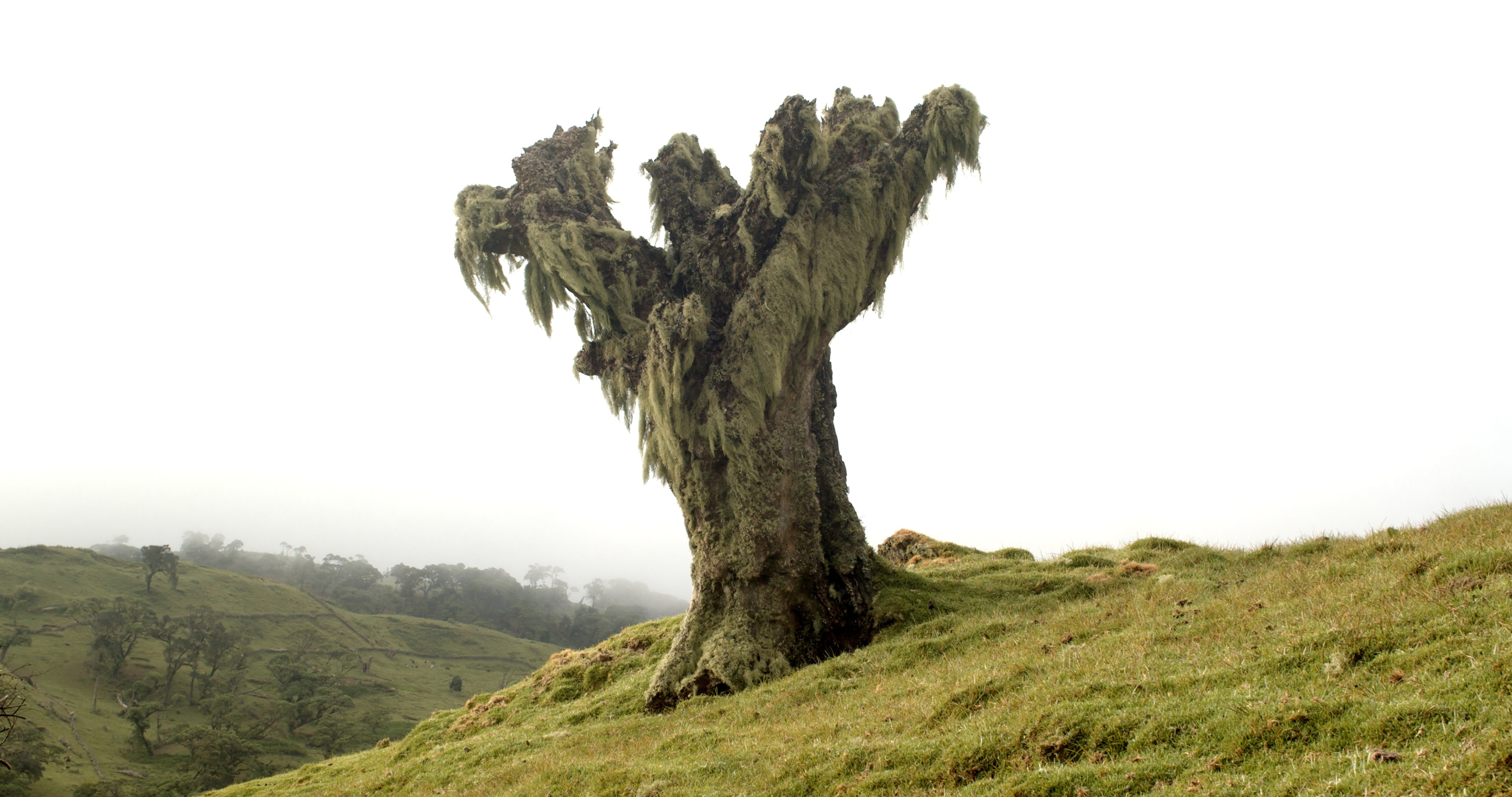
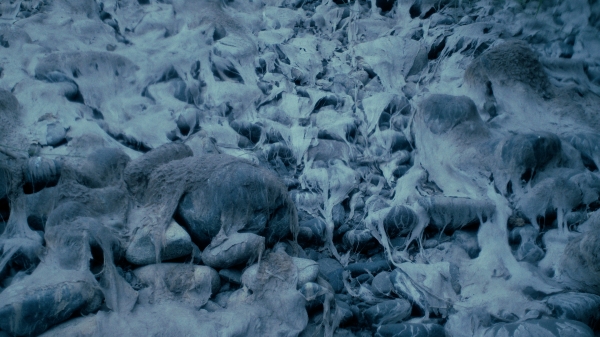
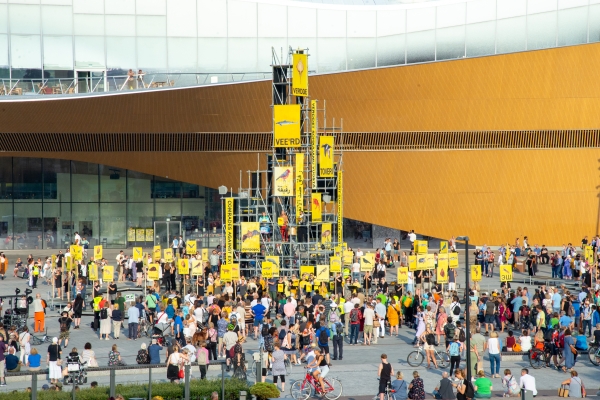
The exhibition Future on Trial. Between Unruly Evidence and Unfinished Climate Justice at the AIL – Angewandte
Interdisciplinary Lab navigates between different conceptions of justice: one that is negotiated in courtrooms through scientific
and legal evidence, data and visual investigations, and another that understands justice as an open, communal process. In
between, alternative forms of prosecution and testimony emerge, such as tribunals that adjudicate intergenerational climate
crimes and demand historical accountability. Indigenous worldviews, diverse relationships with the non-human environment,
perspectives on the coexistence of different species, and the recognition of nature as a legal entity – as exemplified, for
instance, by the legal recognition of rivers in Latin America – open up further conceptions of climate justice.
Through
a dialogue between artistic practices and scientific expertise in the field of climate litigation, the exhibition opens up
a space between evidence and uncertainty, prosecution and redress, institutional responsibility and collective imagination.
Artists, together with land and human rights defenders, examine how colonial expansion and the exploitation of natural resources
continue to shape ecological destruction to this day. The exhibition sheds light on the intertwining of genocide and ecocide,
as well as contemporary forms of dispossession and displacement carried out in the name of environmental protection.
Furthermore,
the works challenge a human-centred understanding of testimony and evidence. Animals emerge as witnesses and figures of resistance,
whilst extinct species and fossils point to past habitats. Frogs, whose sensitivity to environmental changes makes them important
bioindicators, also become symbols of hope for ecological regeneration.
The exhibition juxtaposes different conceptions
of time: the linear temporal framework of the legal system, the intergenerational consequences of historical emissions, and
the long timescales of geological processes. Other works address the increasing exploitation of raw materials in the Arctic
and the deep sea, the life stories of Filipino environmental defenders, and indigenous Andean conceptions of a fundamental
renewal of the world order, as expressed in the concept of Pachakuti.
With contributions by: adO/Aptive, Beatrice
Tulagan, Eline Benjaminsen, Elias Kimaiyo, Forensic Architecture, Jonas Staal, Paolo Cirio, Prin Rodriguez, Radha D’Souza,
Valentino Skarwan
Curators: Adriano Vinca, Camille Belmin, Elisabeth Falkensteiner
Expert and academic
support: Inga Menke, Joy Reyes, Krishna Ariola, Michaela Krömer, Nicholas Petkov
An exhibition by Science Meets
Art, an association promoting dialogue between science and art.
Financial support: European Geoscience Union,
the Norwegian Embassy in Vienna and the City of Vienna’s Department of Culture.
Opening programme (18 November, 6.00
pm): Welcome by Gerhild Steinbuch (Chair of the AIL) and the curators, a guided tour of the exhibition with the artists,
followed by a live set by Rudi Gier and a DJ set by Oko Oko.
Supporting programme until 29 January: to be announced
here.