As one of the first women in Central Europe
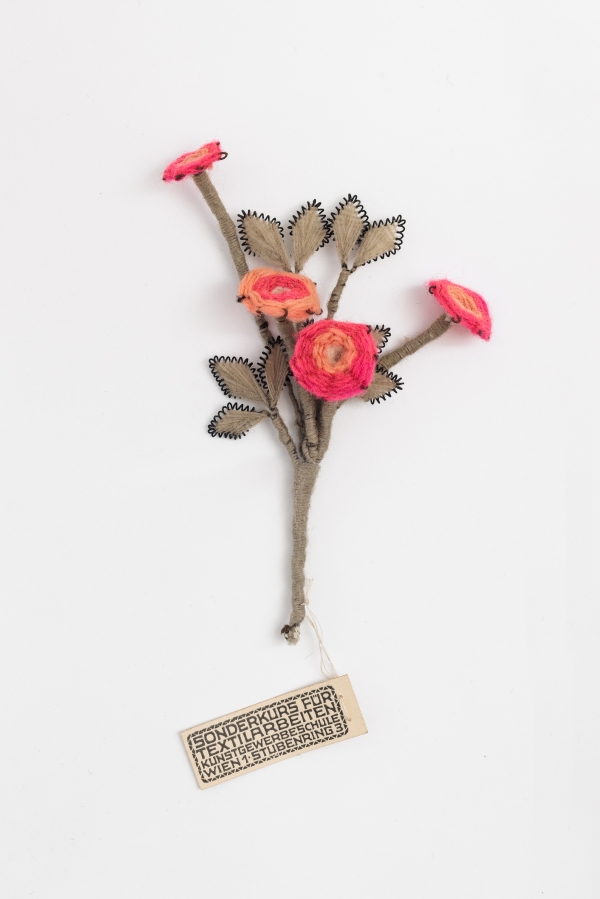
ever to receive a professorship, Rothansl taught artists such as Friedl Dicker-Brandeis, Elisabeth Karlinsky, Vally Wieselthier,
and Emmy Zweybrück in the field of textile techniques. Stoisavljevic was trained as a graphic designer and enamel artist at
the Vienna School of Arts and Crafts and was active early on in the milieu of the Secession, including work for the journals
Die
Fläche (The Surface) and
Ver Sacrum.
The exhibition contextualizes the work of these two
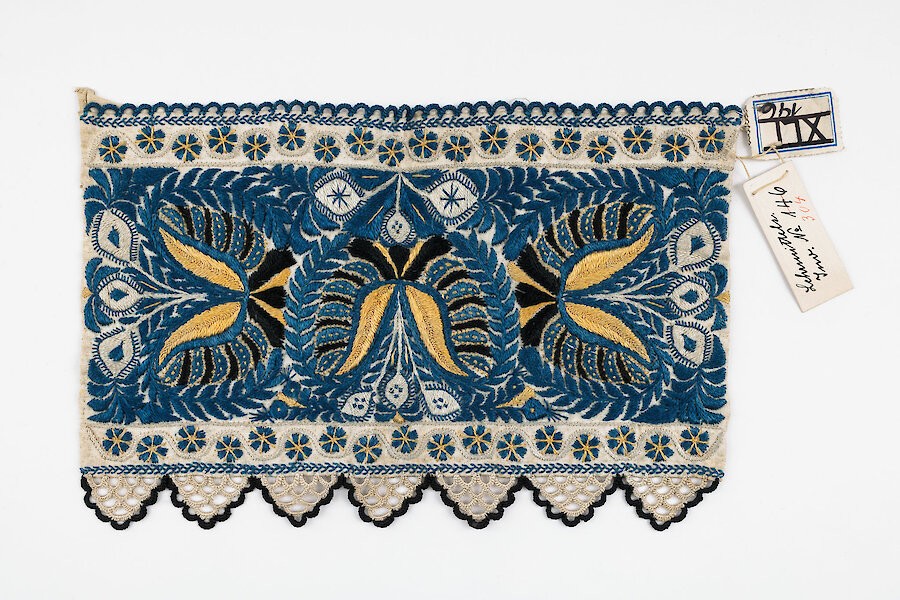
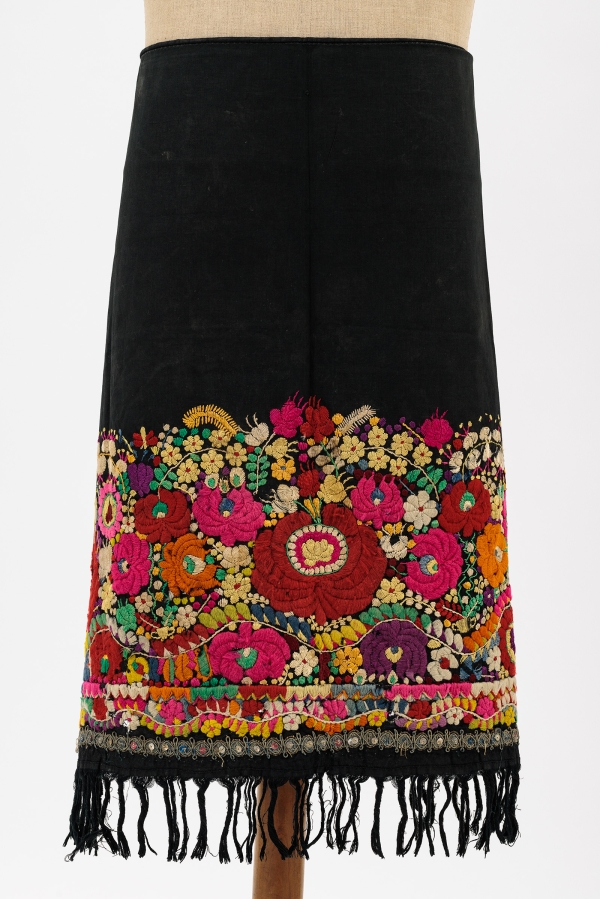
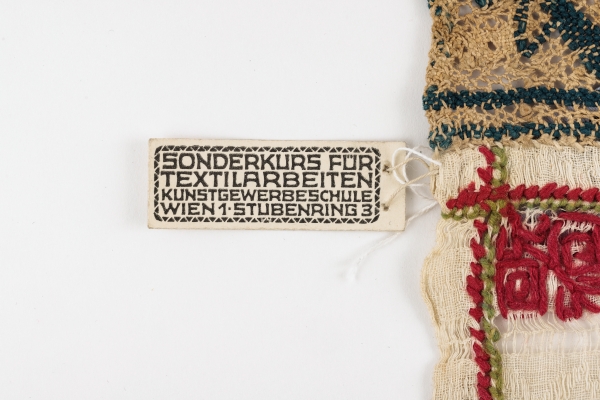
protagonists for the first time on the basis of their textile collection, which have been preserved at the institute Collection
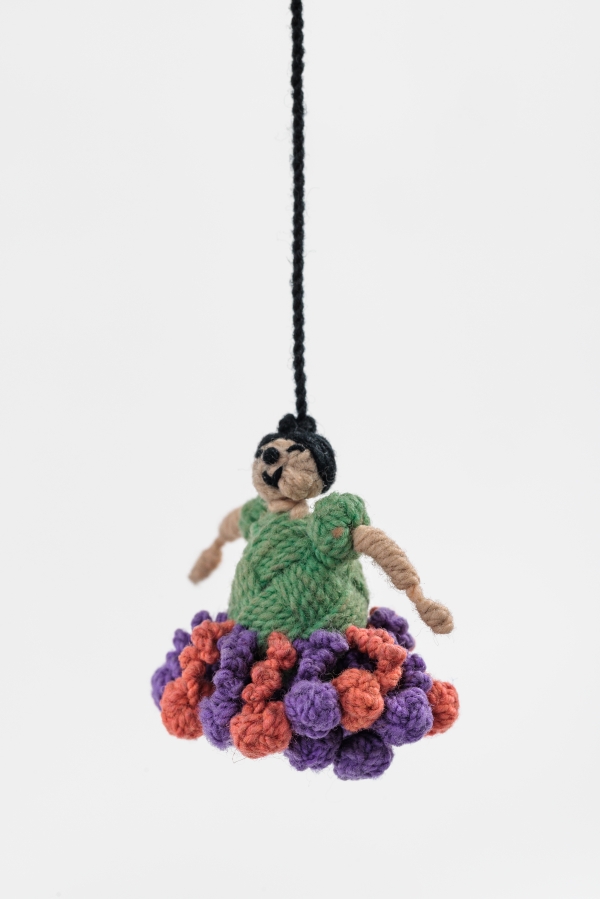
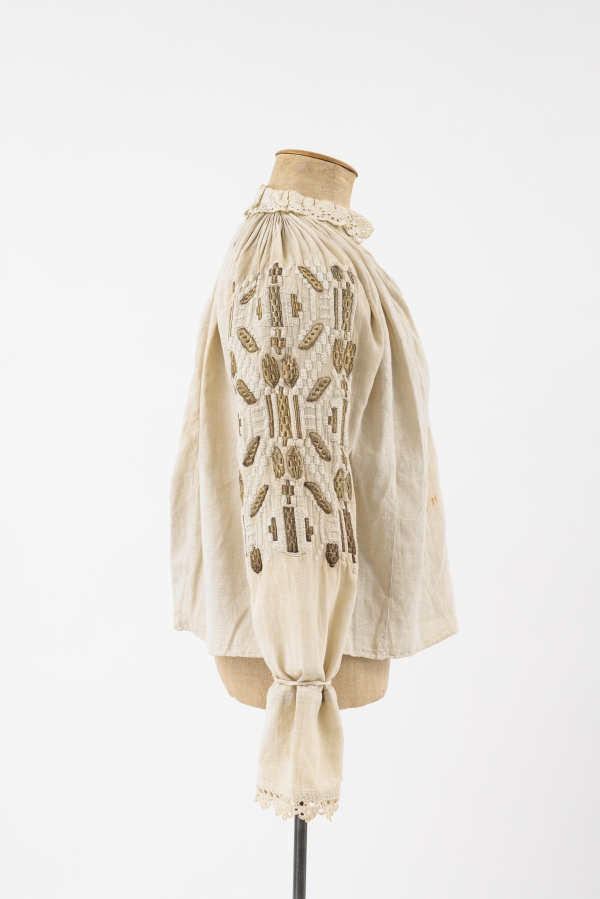
and Archive of the University of Applied Arts Vienna in the form of two omnibus volumes. These feature multicolored, hand-crafted
pieces of knit, embroidered, or lace clothing and fragments woven in regionally specific patterns, originating from anonymous
creators of the rural regions of Bohemia, Moravia, Dalmatia, Galicia, Lodomeria, or Bukovina, but also South and East Asia.
The exhibition investigates the two volumes as reflections of an interest in so-called “Volkskunst” (folk art) that gained
strength beginning in the second half of the 19th century and that was palpable both in the humanities disciplines that were
then establishing themselves, as well as in the (applied) arts and contemporary museum practice. This interest connects the
collections of the two artists with figures such as haute couturier Emilie Flöge, ethnologist Michael Haberlandt, or art historian
Alois Riegl.
Textile Transfers approaches Rothansl’s and Stoisavljevic-Roller’s multifaceted
use of textiles as artistic models and artifacts. On the one hand, the exhibition highlights Rothansl’s teaching and the relevance
of her curatorial practice at the School of Arts and Crafts for the work of her students, with reference to individual careers.
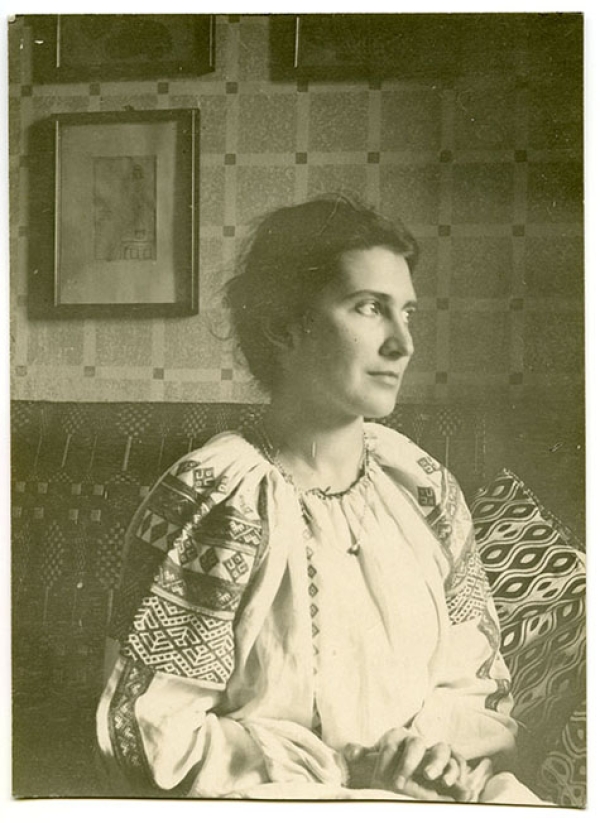
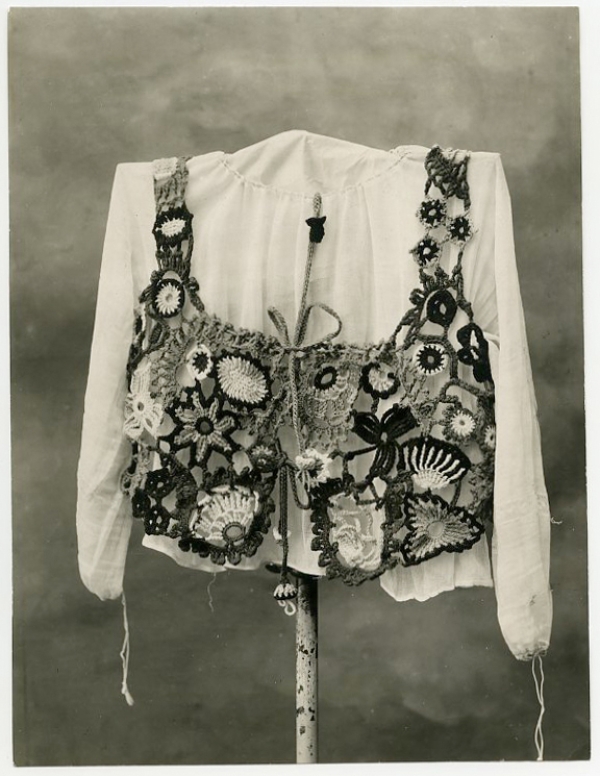
On the other hand, it tracks the photographic staging of clothing compiled by Stoisavljevic as examples of reform dress, placing
it in the context of the artist’s interconnection with the Klimt group. Furthermore, the exhibition traces the roles the collection
items play in the construction of national identity and in the transformation of gender relations in the context of the reform
of arts and crafts around 1900. The eclectic composition of the textile collections raises questions as to the existence of
a primitivism peculiar to the Wiener Moderne, in light of its appropriation of artistic knowledge practices from regions that
therein appear as belonging to the “peripheries” of Austro-Hungary or the “Orient.”
University Gallery Heiligenkreuzerhof
Opening: 30 April 2025, 18:00
Duration: 2 May – 12 July 2025
Opening
hours: Wednesday–Saturday, 14:00-18:00
Closed on public holidays
Accompanying program:
8. May, 6pm, book presentation:
Rethinking Modern Austrian Art Beyond the Metropolis. Lecture
by Julia Secklehner, followed by a conversation between the author and Stefanie Kitzberger and Eva Klimpel. Location: University
of Applied Arts Vienna, Vordere Zollamtsstraße 7, A-1030 Vienna, Seminar Room 20, 4th floor.
More
information15. May, 6pm, lecture:
Marta Filipová: A fine line: lace between folk art and
modern design. Location: University of Applied Arts Vienna, Vordere Zollamtsstraße 7, A-1030 Vienna, Seminar Room 20,
4th floor.
More
information4. Juni, 18 Uhr, lecture:
Matthew Rampley, States of Exception: Collecting
Asian Art and National Identity in Central Europe. Location: University of Applied Arts Vienna, Vordere Zollamtsstraße
7, A-1030 Vienna, Seminar Room 20, 4th floor.
More
information