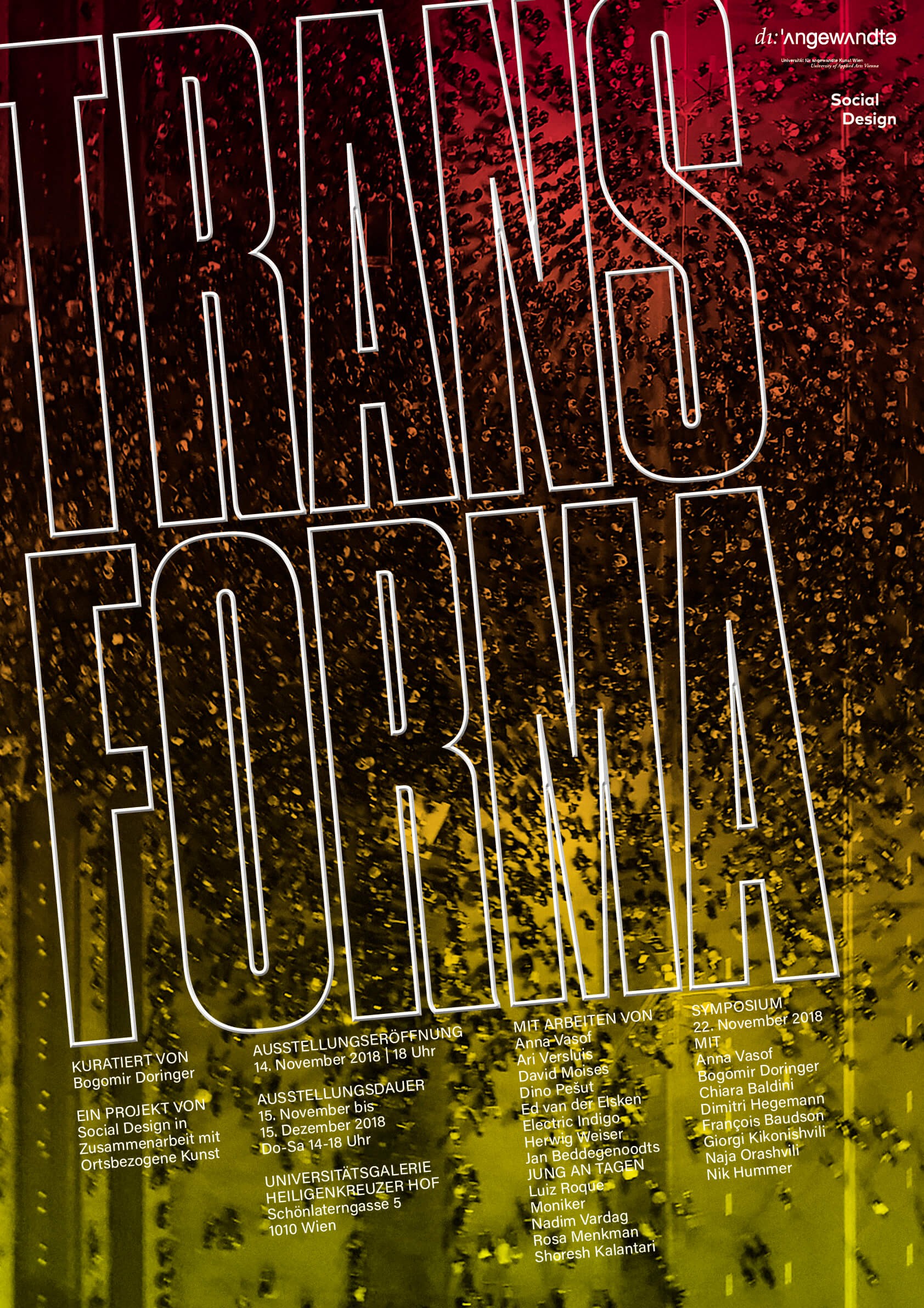
A project by Social Design in collaboration with Ortsbezogene
Kunst, curated by: Bogomir Doringer
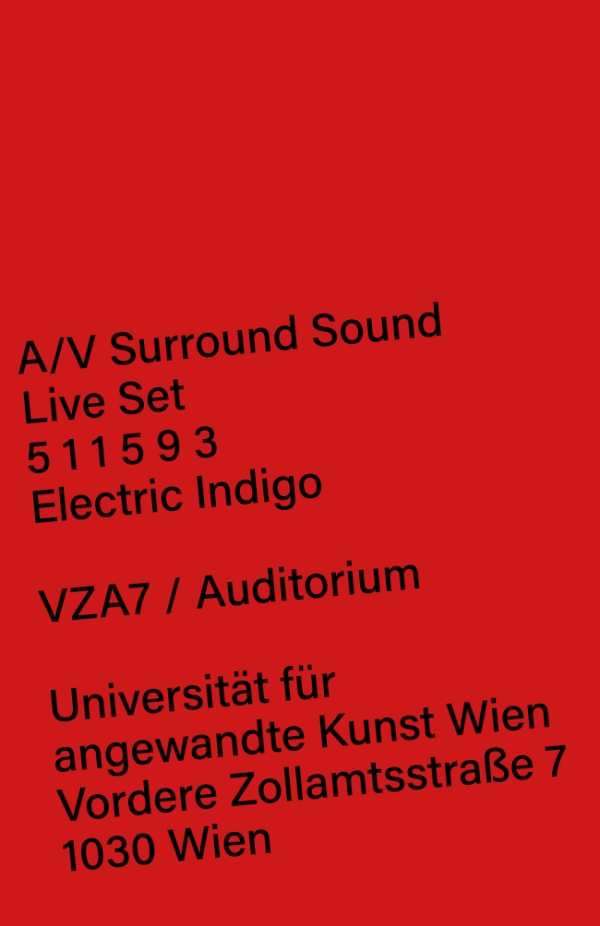
Opening Concert 9.30 pm
Electric Indigo
Auditorium
Vordere Zollamtsstraße
7
1010 Vienna
The rise of crowds seems to fluctuate as a reflection on the actual political
climate. We value the freedom we have and aim for individualism, yet we are also fascinated and drawn to crowds in time of
insecurities and fear.
This exhibition takes the ongoing research project
I Dance Alone by the Serbian/Dutch
artistic research PhD student Bogomir Doringer (University of Applied Arts Vienna) as a starting point. In 2014 he started
filming various clubs from a bird’s-eye view, aiming to document variations of collective and individual choreographies worldwide.
His project insists on two different forms of dancing: that of urgency and that of entertainment. Functions of dance can be
social, ceremonial, erotic, liturgical, competitive, martial – and as Doringer adds:
political.
For instance,
in countries where the social system has failed and cultural institutions are absent, clubs act as a gathering hub where a
“collective body can be formed, moving, educating, and at times manipulating young people. Dance floors trigger social interactions
– potentially political or even a form of activism or spiritualism – that could be applied in the outside world. Among many
questions Doringer’s project is also asking if clubs might be understood as spaces for practising the power of collectivism:
Are they some kind of formalin in which the collective body is preserved until emergencies arise?
Trans-Forma
starts from research on club culture as an initiator of changes, as a form of activism, as an artistic expression where dancing
is seen as an urgency in times of socio-political crisis. Collective dances and participation are understood as a transformative
mechanism of survival, but also as an individual and collective empowerment. Restrictive political systems and social hypocrisy
are giving birth to new parties, concepts and groups. The new youth is organising itself from the dance floor, in demand for
recognition and free spaces in which the curatorial agenda addresses political urgencies. Vulnerable bodies through the state
of trance experiences transform oneself or groups, further reshaping urban spaces and structures. Urban planning and
changes in cities started in increasingly involving club culture and contemporary rituals of dancing and gathering as a way
of changing spaces, reanimating dead city zones. The economic value of such gatherings is being recognised and negotiated.
Some of these practices recall not that far away history or ancient rituals. In 2019 we also celebrate the 50th anniversary
of the Woodstock Music & Art Fair, which took place from August 15 to 17, 1969 in the Catskill Mountains of Southern New
York State and is widely regarded as a pivotal moment in popular music history, as well as the definitive nexus for the larger
counterculture generation.
During Vienna Art Week the University Gallery HKH / University of Applied Arts Vienna
organises and produces context and content in the field. Together with interdisciplinary international guest speakers and
artists, various topics will be researched. This is the first phase of the project that is a collaboration with q21 Artist
in Residence program:, it will transform itself and extend to the frei_raum Q21 exhibition space from April till September.
Artists: Anna Vasof, Ari Versluis, David Moises, Dino Pešut, Ed van der Elsken, Electric Indigo, Herwig Weiser, Jan
Beddegenoodts, Jung an Tagen, Luiz Roque, Moniker, Nadim Vardag, Rosa Menkman und Shoeresh Kalantari
Trans-Forma
Symposium