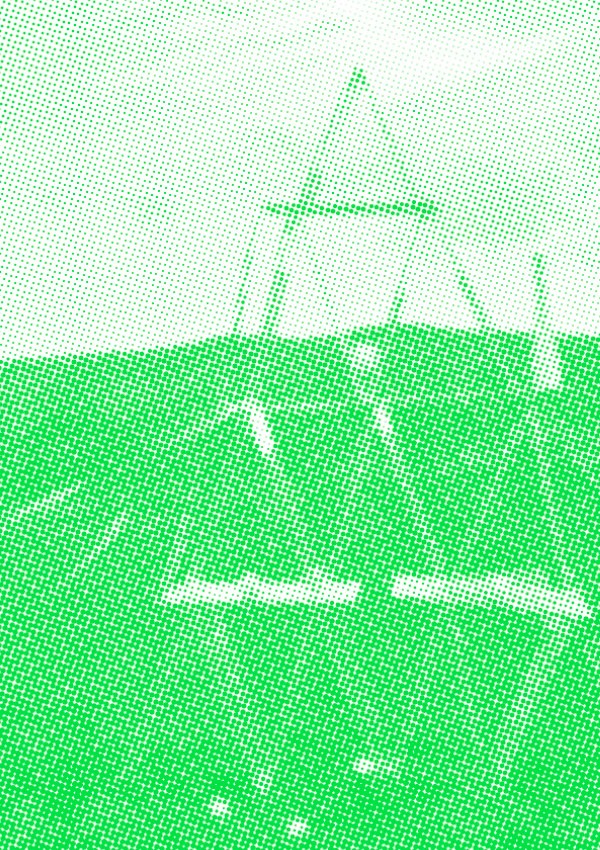
Jam Session: Shaken Grounds
As part of
Lange Nacht der Forschung [the Long Night of Research], Shaken Grounds. Seismography of Precarious Presences presents a three-hour
public jam session at AIL.
This transdisciplinary artistic research project
explores the interconnections between geological, social, and psychological tremors and examines how unstable environmental
conditions are inscribed in bodies, perceptions, and social contexts.
In an open experimental studio, text, performance,
live editing, live sound composition, costume elements, set design elements, and objects come together in a free interplay.
This jam session makes the project’s working methods immediately tangible: seismography is understood here not only
as a scientific method, but also as an artistic practice of perception, recording, and establishing connections.
For the research team, the format offers an opportunity to recombine artistic materials, questions, and content and to further
develop them in the process. At the same time, the session is designed as an open space for engagement: the audience is invited
to gain insights into the artistic research, ask questions, and engage in conversation with the team. Throughout the event,
individual participants will be available for discussion and conversation.
By and with: Nikolaus
Gansterer, Mariella Greil, Victor Jaschke, Peter Kozek, Werner Moebius, Lucie Strecker
This event is also part
of the experimental studio, which the research project Shaken Grounds. Seismography of Precarious Presences is setting up
at AIL during April.
About the Shaken Grounds exhibition
The exhibition presents findings
from the research project Shaken Grounds. Seismography of Precarious Presences (funded by Austrian Science Fund (FWF): AR
780. DOI: 10.55776) and also marks the launch of the Creative Europe project Shaken Grounds: Art as Seismography (funded by
the European Union).
Views and opinions expressed are however those of the author(s) only and do not necessarily
reflect those of the European Union or the European Education and Culture Executive Agency (EACEA). Neither the European Union
nor EACEA can be held responsible for them.