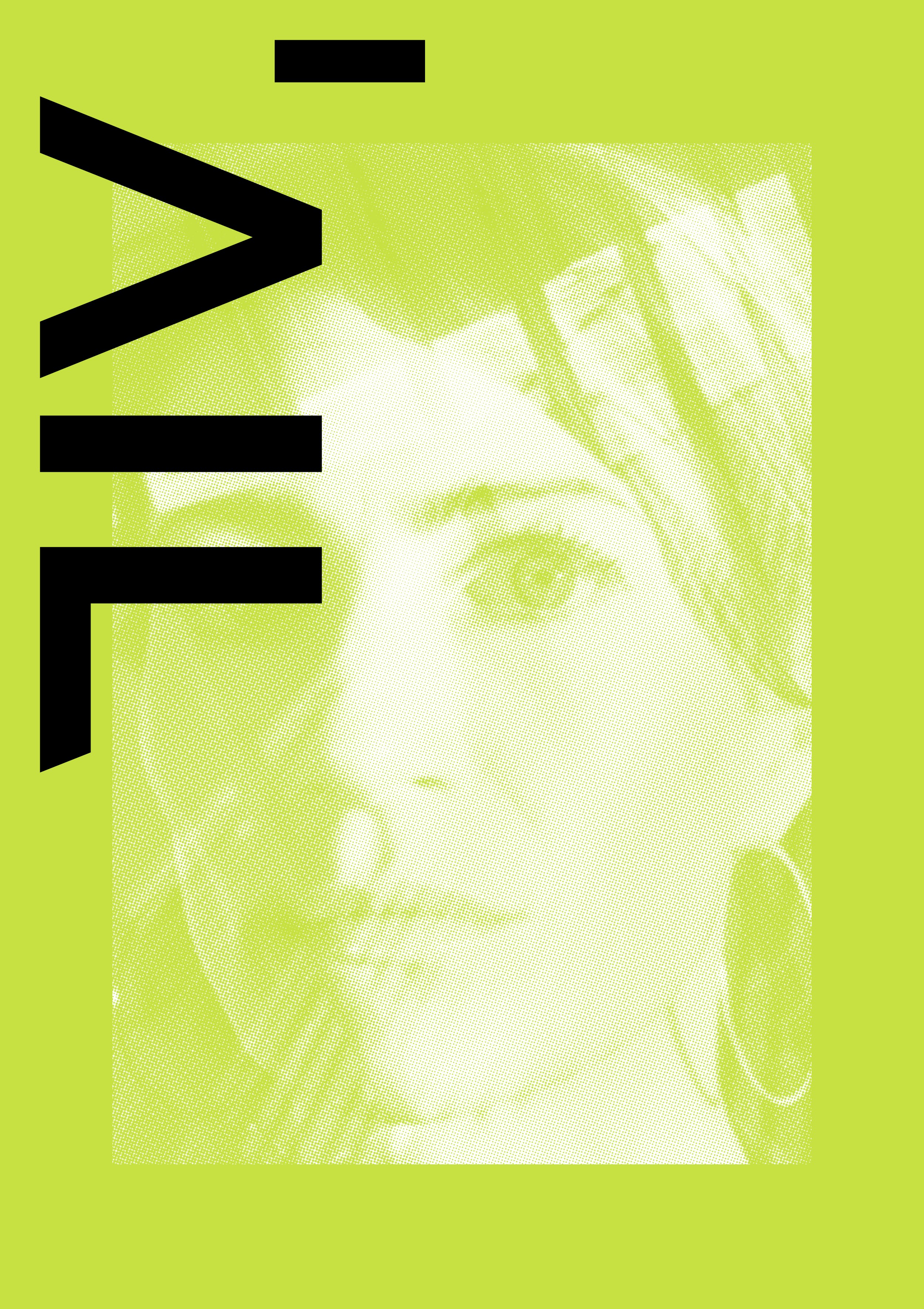
A
lecture by Nancy Baker Cahill, fellow at the Weibel Institute for Digital Cultures.
Nancy
Baker Cahill is a transdisciplinary artist whose work examines complex systems, with an emphasis on the relationship
between consciousness, intelligence, and embodiment. Systems thinking is integral to her poetics; her concerns focus on power
and its biopolitical impacts, particularly ecological and social harms.
In this talk, Nancy Baker
Cahill, who is currently a fellow at the the Weibel Institute for Digital Cultures (University of Applied Arts Vienna), will
discuss projects in her research-based practice that address creative co-building: what has worked, failed, and remains unknown.
The talk will address human perception, ecological imagination, sensory expansion, and the work of sense-making through overlapping
existential crises.
Using a blend of analog and digital media, Baker Cahill creates immersive
experiences, video installations, sculptures, and conceptual projects that engage the human sensorium and are rooted in drawing.
Since 2018, she has been the Founder and Artistic Director of 4th Wall, a free, AR public art platform exploring resistance
and inclusive (often participatory) creative expression, which she considers to be a form of social sculpture. Her monumental
AR artworks build on the lineage of ecofeminist land art, often highlighting interdependence and the more-than-human. She
takes a critical approach to all of the emerging technologies she uses, subverting convention to offer alternative imaginaries.
Baker
Cahill has received the 2026 USA Fellowship Award, the 2025 Full Dome Festival's Janus Award for Best Feature Film, the 2024
Infinity Festival's Monolith Award for New Media Fine Art, the 2022 LACMA Art +Tech Grant, a 2022 C.O.L.A. Master Artist Fellowship,
and the 2021 Williams College Bicentennial Medal of Honor. She is a former Berggruen Institute Artist Fellow, is an Affiliate
at the Harvard metaLAB, and a TEDx speaker. In 2026, she will be an Artist Fellow at the Weibel Institute for Digital Cultures
in Vienna.
Solo museum presentations include LACMA, The Hammer Museum, The Whitney Museum, The Georgia Museum
of Art, and an upcoming solo exhibition at the North Carolina Museum of Art. Her work is held in the collections of LACMA,
The Whitney Museum of American Art, The Georgia Museum of Art, The Museum of Art and History; RFC Art Collection, The Smart
Museum of Art, The Winthrop University Collection, The Lyman Allyn Art Museum, and 0x Collection in Basel, Switzerland.
She
has been profiled in many publications, including The Art Newspaper, Frieze, and The New York Times. Her essays appear in
The Los Angeles Review of Books, Nam June Paik Art Center Reader and October Magazine.
Research
interests are Digital bioacoustics, the physics of light and perception, biomimicry, systemic power and networked resistance.
Website by Nancy Baker Cahill
About the Weibel
Institute for Digital Cultures:
The Weibel Institute for Digital Cultures is a space for intervention,
investigation, and experimentation within the expansive disciplines of arts, science, and technologies. Based at the University
of Applied Arts Vienna, the institute critically engages digital and algorithmic cultures. Building on the rich heritage of
Viennese investigations into cybernetics, net cultures, media art, and tactical media, the institute serves as a vital node
within a global network of research institutions on digital cultures.
The Weibel Institute for
Digital Cultures strives to challenge the underlying logics of digital cultures, unraveling the intricacies of cybernetic
control systems and machine learning processes, the dynamics of online communities, the vast landscape of media-technological
infrastructures, and their continued entanglements. This endeavor is guided by a commitment to remaking research itself, taking
into account reflexive methodologies and seeking collective expressions. Taking on social and ecological responsibility in
the face of emerging data systems, the institute questions the extractivist origins of digital landscapes and explores potential
technological approaches beyond today’s data positivism. The Weibel Institute for Digital Cultures invites researchers, students,
artists, and activists to join a space for reflection, discussion, and collaboration. Offering access to resources such as
the Peter Weibel Archive and an extensive library, the institute fosters theoretical and artistic explorations that probe
deeper into the cultures that make up our digital spaces. This public program includes lectures, symposia, exhibitions, workshops,
and other activities.