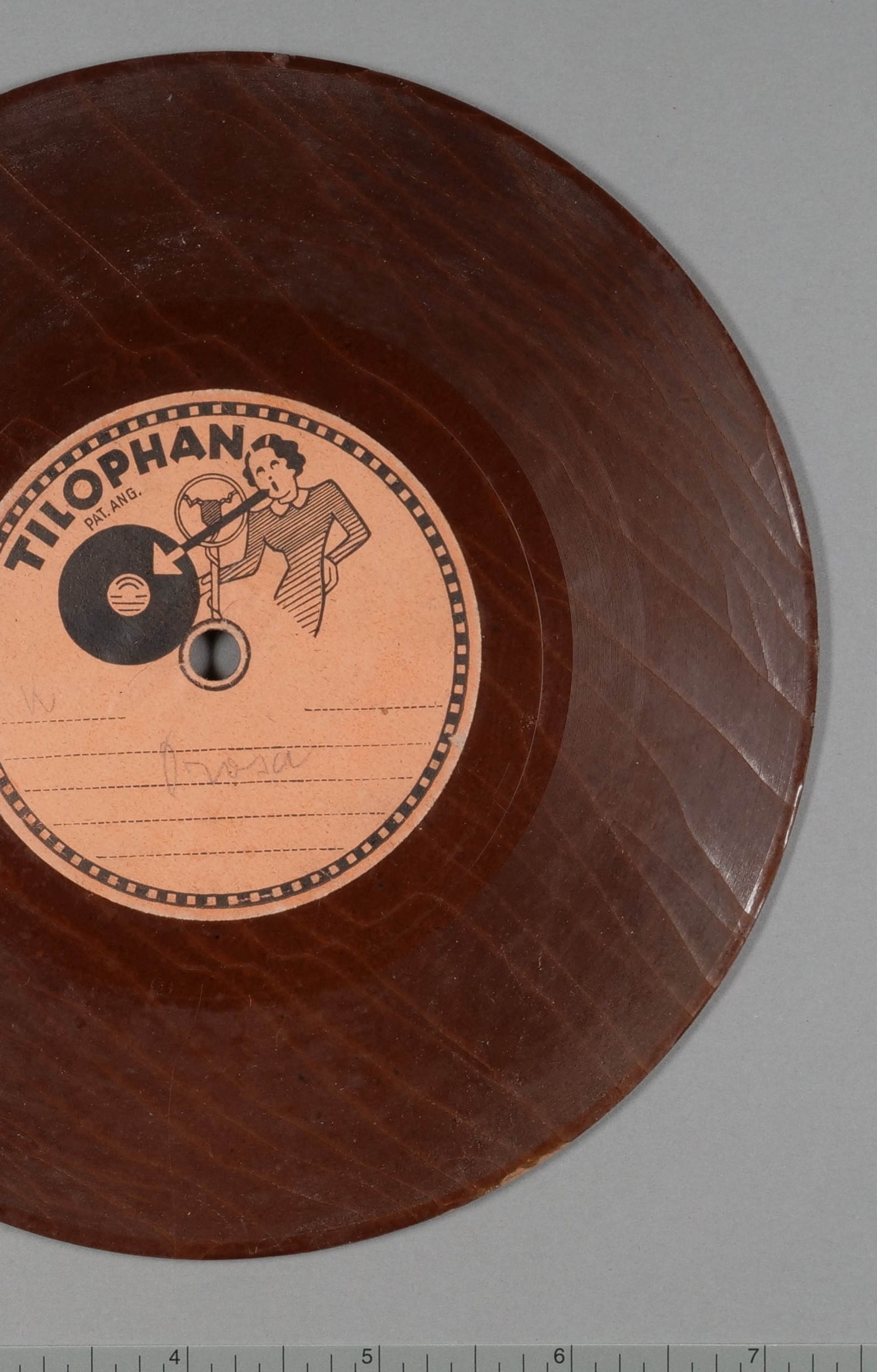
Speaking, singing and using one’s voice for communication
is one of the oldest cultural techniques. And hearing is one of the earliest human senses, which we actively pursue and exercise
already as a foetus. Since the invention of storing and reproducing voices on sound carriers, the ephemeral level of the acoustic
has taken on a materiality outside the human body.
This has made it possible
to keep the voice for individual and cultural memories. These techniques of saving and remembering are connected to the desire
to hold on to the voice as a coveted object and to preserve it for the future – for the family, the “home”, for collecting
and “scientific purposes”. Simultaneously, they reveal the paradox of the material fixation of the ephemeral. Every time we
replay a sound recording, we are dependent on listening and the fleeting nature of sound as its fundamental character, which
raises the question: What does it mean to capture a voice on a sound carrier? What does this mean culturally, epistemologically,
technically and politically both in terms of tangible and intangible cultural heritage?
Fleeting Voices discusses voices
and their sound carriers as a subject of heritage studies, materials science, media theory, art and cultural history. It explores
the specifics of acoustic heritage, the agency of (various – also human) sound carriers in archives or artworks and the voice
as a medium. It focuses on the voice and the acoustic sphere as an inherently ephemeral and intangible object of cultural
heritage research. At the same time, it addresses recorded voices as highly material objects and still underestimated subjects
of heritage science or art history.
For more information visit the
website