"Freud and the Émigré" addresses the seminal role of Sigmund Freud and his writings, as well as the
part played by his students in the construction of Viennese heritage abroad through their influence on the creative license
of Austrian émigrés and exiles in Britain.
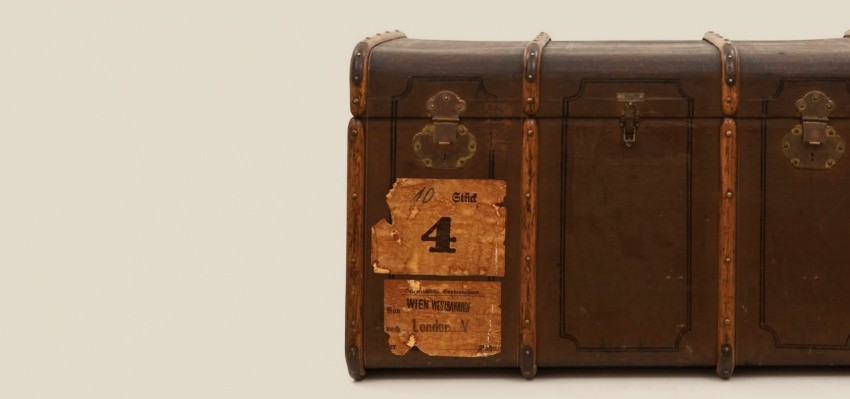
Émigré and exiled art historians, artists, authors,
sociologists, and philosophers upheld Freud’s celebrity aura as a “memory image” of a lost Viennese home, and as such a nostalgic
icon of their coming of age in Vienna, as well as an idealized recollection of a turn of the century “Intellectual Vienna”.
These émigrés, who would become significant international thinkers and producers, further applied Freud’s lessons in their
creative endeavors as they adapted to new experiences abroad, contributing to the renewal of British culture. Thus, in many
ways Freud was a touchstone of Austrian culture and intellect even as Austrians were forced out of their homeland during the
crises approaching the mid-century. How did their Freudian heritage help Austrian cultural producers come to terms with political
and social exclusion, Nazi Germany’s brutal persecutions and the horrors of World War II? After such traumatic losses of belongings,
homes, and homeland, and with the subsequent hardships they faced as they integrated into British culture, can we better understand
their reclamation of identity and re-location of self through their attachment to and investment in Freud’s lessons? How did
these émigrés and exiles develop new, hybrid Viennese-British identities and a pointedly Freudian cultural language?
The
symposium "Freud and the Émigré" presents new research on the subject of Freud’s role in the lives of émigrés and exiles,
exploring the way these figures accessed Freudian thinking and fashioned their own Freudian language. Distanced from home,
these important cultural producers used their Viennese/Austrian heritage to their advantage, contributing to the renewal of
culture at a critical
Programme (
PDF
for download):
10.00 – 12.00 Panel 1: Freud’s Lessons and Émigrés' Civic and Political Engagements
During and Post-WWII
Opening remarks by Elana Shapira (in English)
Louis Rose: Exile and War Work: Ernst
Kris and E. H. Gombrich in London and New York (in English)
Michal Shapira: Anna Freud Shaping Child Education
and Promoting "Democratic Citizenship" in Britain (in English)
Moderated by Elisabeth Brainin
12.15 – 13.45 Panel 2: Viennese Cultural Networks in Britain
Werner Michler: Intellectual hero, most
beloved master. Stefan Zweig and Sigmund Freud (in German)
Lisa Silverman: Hilde Spiel’s Freud: Jews, Exile, and
a Viennese Legacy (in English)
Moderated by Deborah Holmes
15.00 – 16.30 Panel
3: Authorship and Psychoanalysis in Film and Art
Laura Marcus: Émigrés, Exiles and Strangers: Berthold Viertel
and 1930s Cinema in Britain (in English)
Régine Bonnefoit: The Psychoanalyzed Artist – Hodin’s book Oskar Kokoschka.
Eine Psychographie (OK. A Psychography) (in German)
Moderated by Katharina Prager
16.45
– 18.15 Panel 4: Vienna and Beyond – Freud’s Heritage and Strategies of Cultural Renewal
Elana Shapira: Marie
Jahoda Deconstructing Freud (in English)
Mitchell Ash: Whose/Which "Freud"? Social Context and Discourse Analysis
of the "Controversial Discussions" (in English)
Moderated by Lisa Silverman
18.15
– 18.45 Closing remarks by Friedrich Stadler (in German)
The two-day symposium starts
on Thursday, November 8, 2018 at 6 pm with the keynote lecture The Promised Land: Freud’s Dream of England (in German) by
Liliane Weissberg at the Sigmund Freud Museum, Berggasse 19, 1090 Vienna. For more information click here ...
Concept by Elana Shapira, University of Applied Arts Vienna, FWF project leader "Visionary Vienna: Design and
Society 1918-1934" & Daniela Finzi, research director of the Sigmund Freud Museum
Application