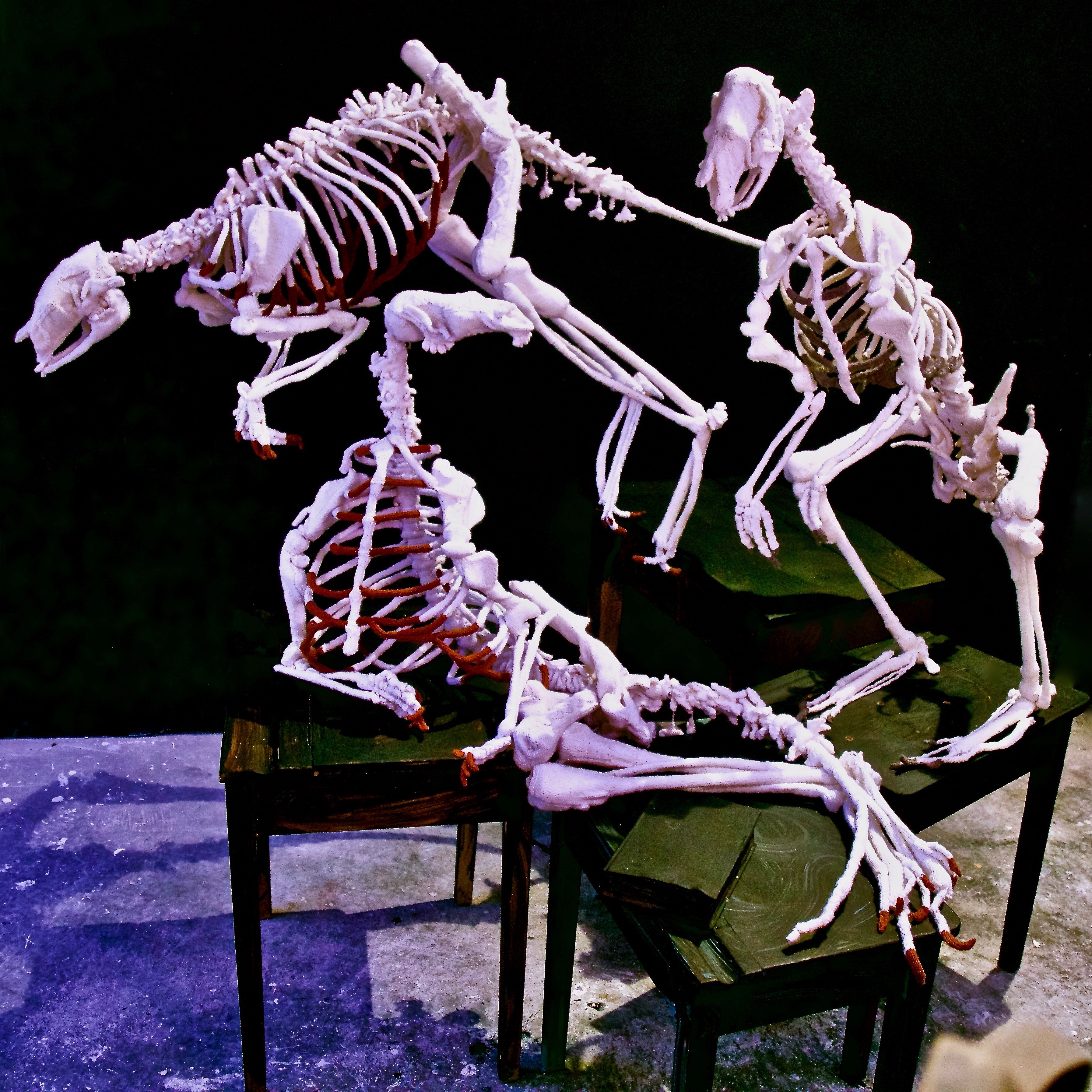
Michele Beevors (Dunedin): The Dead Heart
A Knitted Anatomy Collection
Predicting a Catastrophic Future of the Planet
The work in
this exhibition explores the traditional relationship between science and art as one based on observation, still used today
as a model for data collection and as the first building block of teaching in art schools worldwide. The work is based on
research undertaken of the comparative anatomical models found at the Museum of Australia in Sydney but notes that the collection
is arbitrary in nature, and brings together the exotica, found in all museums, everywhere.
This
plethora of sameness has sparked an interest in the 18th Century, as this, the century of exploration, also signals the beginning
of the end as the blossoming of science piggy backed on the pursuits of power hungry monarchs and resulted in the exploitation
of people and places. ‘The Wreck of Hope’ signals this engagement with our own demise. For over three hundred years scientists
such as Alexander von Humboldt have been warning about the dire consequences of deforestation on whole ecosystems (von Humboldt
practically coined the term ecosystem) all life in contemporary times reaps the rewards of his prophesy.
The twelve
works in the exhibition The Dead Heart have evolved from the series The Anatomy Lesson begun in 2005 with
a single hand knitted male skeleton. In the work for this proposed exhibition engages in the pursuit of a feminist critique
of waste that examines the consequences of rampant capitalist pursuits in terms of species and habitat loss. Knitting of comparative
anatomy is combined with the flotsam of everyday life and predicts a catastrophic future for life on the planet. The use of
craft traditions; knitting and woodwork examines the horrific toll capitalism forces on the environment. The scope of the
work is enormous while the sculptures are rendered in excruciating detail and mimic nature in scale. The skeletal remains
knitted here are not endangered species but have something in common as they, human and animal alike are the ‘survivors’.
The work in this series spans ten years of labour and examines loss that is both personal and political. There is
history lesson that the work hints at; The Dead Heart relates to the role Empire building played in the establishment
of such collections of comparative anatomy examining the moment when nature is discovered and tossed aside.
The base
for the collection of sculptures, emphasises this moment, it will be constructed from
shipping pallets, crates and colonial
style furniture; a sea of waste.