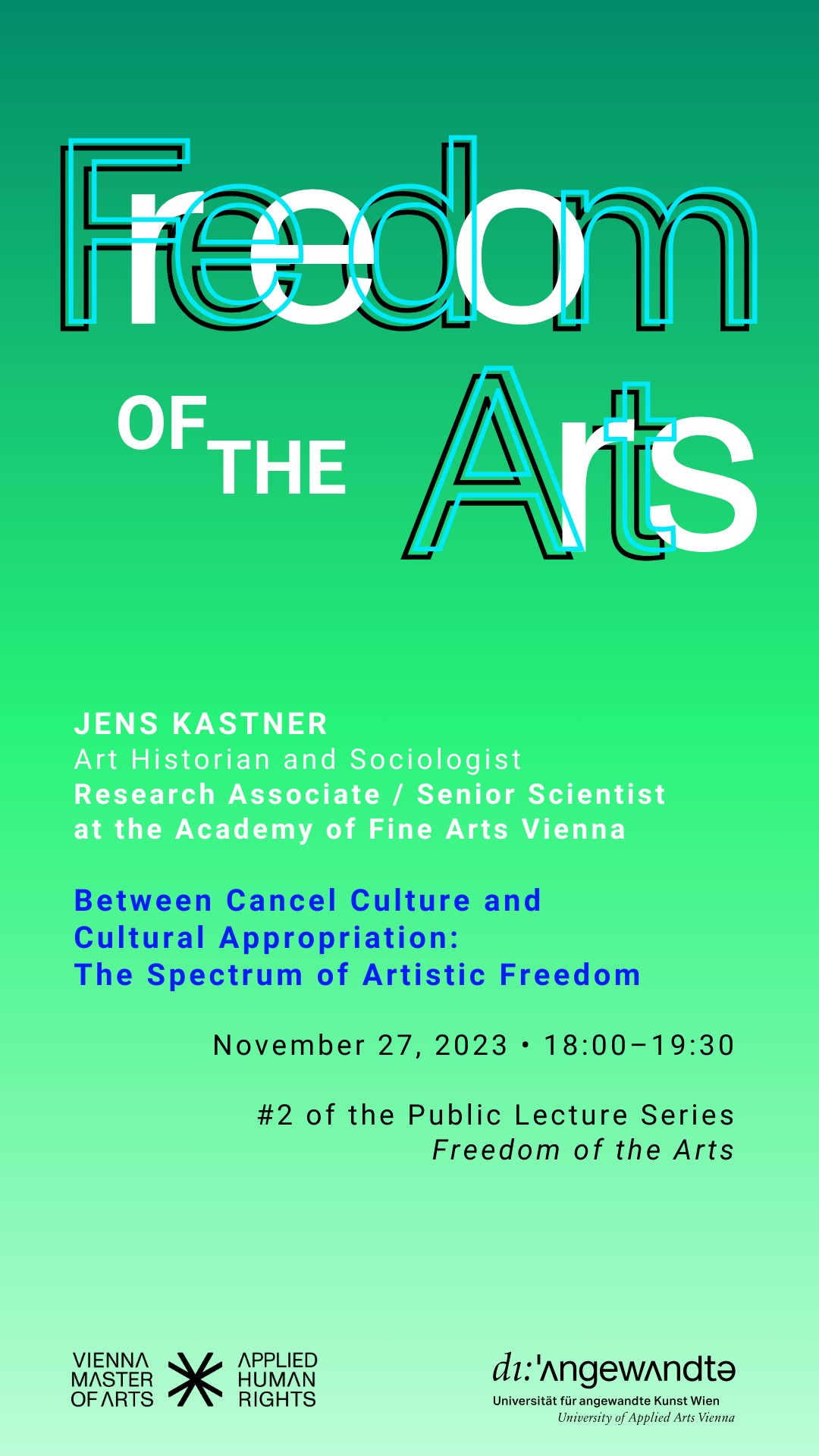
Applied Human RightsArtistic freedom operates within complex networks of recognition and legitimacy, with contemporary
discourse highlighting two contentious subjects: Cancel Culture and Cultural Appropriation.
Cancel
Culture, a phenomenon scrutinizing artists’ ethical conduct, sparks debates about the separation of an artist’s work from
their personal behavior. Historically, artistic autonomy was grounded in the archetype of the artist-genius, accountable solely
to future judgment. However, this paradigm is now challenged by concepts like the “Death of the Author” (Barthes 1967), which
suggests that an artist detaches from their work, enabling it to evolve independently. While it values artistic autonomy,
it often leans into a male-dominated theoretical tradition accentuating independence.
Cultural Appropriation raises different concerns, revolving around the respectful use of elements from cultures
not one’s own. The line between appreciation and appropriation is thin, leading to tensions when aspects of a culture are
employed without due acknowledgment, understanding, or permission. Navigating this issue necessitates distinguishing between
genuine cross-cultural engagement that enriches the art world and exploitation or disrespect.
Balancing
artistic freedom with responsibility is the crux of these matters. Achieving this equilibrium requires open and respectful
dialogues among artists, critics, and affected communities.