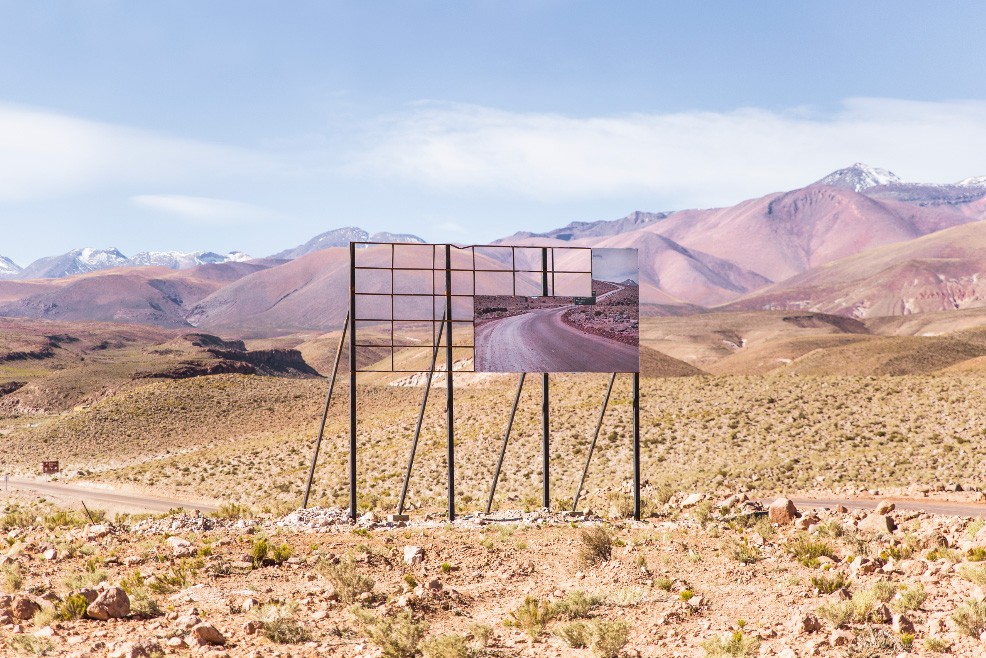
For our upcoming session, we will read texts by Kathryn Yusoff and materials
by Jamie Allen on aspects of the geological commons or “a form of collective communion that imagines a world in which precarity
and abundance is shared across the possibility and forms of life; and that this sharing enacts the possibilities of a common
life between organisms” (Yusoff 2017). In recent years, a turn toward posthuman and inhuman ecologies seeks to reposition
planetary exchanges at the heart of post-anthropocentric discourse. How do we establish responsible stances and actions that
engage with and translate planetary-scale ventures in extractionism, and instantiate alternatives to these?
We look forward to discussing questions of ecological, economical and technological constraints on planetary communion,
the challenges of geological complexity and practices for artists, media makers, and researchers, as steps and experiments
toward or away from different kinds of planetary intimacy.
On Planetary
Ecologies, the reading group and discussion series, started in 2020: “We are interested in voices in research, art, media
and design that concern themselves with planetarity and its futures. That is, the ways in which people(s), life, and other
beings on earth negotiate its alterity. As such, we are committed to seeking out, understanding, spending time with and reckoning
with the actions called for by voices of scholarship and organisation that would seek to go beyond the ‘management of diversity’
(Andrea N. Baldwin) and ‘index[es] of white supremacist domination’ (Romy Opperman).” For more information, please visit https://criticalmedialab.ch/planetary-ecologies-2022/.
Materials brought into discussion at the November 14th session:
Yusoff,
K. (2017). ‘Politics of the Anthropocene. Formation of the Commons as a Geologic Process’, Antipode, 50(1), pp. 255–276. Available
at: https://doi.org/10.1111/anti.12334.
Allen, J. (2021) ‘On the Modes of Technical Extraction in Chile’, in N. Rossiter and B. Neilson (eds) Logistical
Worlds. Infrastructure, Software, Labor. London: Open Humanities Press, pp. 51–58. Available