The
city where most of us live is considered to be an international capital of culture and the arts. This is also reflected in
the touristic marketing of Vienna.
In this talk, on the one hand, I want to look at another
Vienna: that of science and its popular representations and its public places. On the other hand, I’d like to discuss how
site-specific art could help to make science in the city more visible.
Vienna is, as several rankings regularly
confirm, one of the most livable and most visited cities in the world. In tourism, the city scores with a rich offer of art
and culture, which also shape the self-image of the city. At the same time, it is being pushed into the background that Vienna
was and is also a “smart city” shaped by scientists.
The fact that Vienna e.g. has such good drinking water was achieved
by one particular researcher. But also the intellectual and artistic heydays around 1900 including Klimt and some of his paintings
bear the strong influence of scienve and medicine of that time.
However, apart from a few exceptions, Vienna only has
few places that make science and in particular the rich history of science of the city visible and experienceable.
In
my presentation I would like to show how little science and its representatives are present in the cityscape and in the collective
consciousness of the Viennese. On the other hand, I would like to discuss possible counter-strategies: first a book
project I am currently working on and second, in particular, if site-specific art could contribute to make this side of the
city more visible through interventions.
Klaus Taschwer is a journalist working for the Austrian daily “Der Standard”
and writes books on the history of science and universities in the 20th century, e.g. “Der Fall Paul Kammerer” (Hanser, 2016)
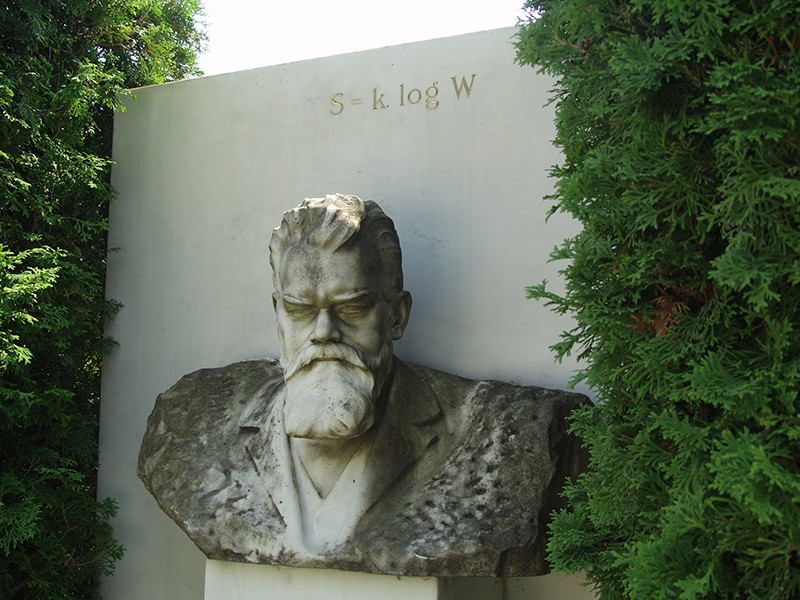
http://independent.academia.edu/KlausTaschwerwww.ortsbezogenekunst.atCredit: Thomas Schneider, 2002 (Grab
Boltzmann)