Human health is defined as a „state of complete physical, mental and social well-being and
not merely the absence of disease and infirmity“ (WHO, 1948).
“Attaining the highest possible
level of health is a basic right of every human being, regardless of race, religion, political convictions, economic and social
status” (WHO, 1948). The benefits of nature on human health and wellbeing (both physical and psychological) have been amply
documented in the peer-reviewed medical literature.
The concept of immersion into nature and more specifically
into forests has been successfully implemented in several countries. Shinrin-yoku („forest bathing“, walking and/or staying
in forests in order to promote health) is a major form of relaxation and therapy in Japan. Numerous beneficial therapeutic
effects have been documented, these include, inter alia: alleviation of sleep disorders, stress-induced illnesses and regeneration
and subjective perception of stress, increase of positive emotions. Specific benefits to the immune system and cardio-vascular
system are inconsistently reported. However, results pertaining to children’s health and the activity of natural killer cells
in relation to stays in nature are very intriguing.
Modern life-styles are often associated
with sedentary indoor occupations, fast pace of life, traditional diets replaced by diets higher in refined sugars, refined
fats, oils and meats resulting in a global obesity epidemic, type II diabetes, coronary heart disease and other chronic non-communicable
diseases that lower alpine life expectancies. Concurrently a majority of people suffer from a loss of connectedness with nature
and natural environments. This loss also highlights the importance of a clear working definition of nature in order to inform
and develop policies.
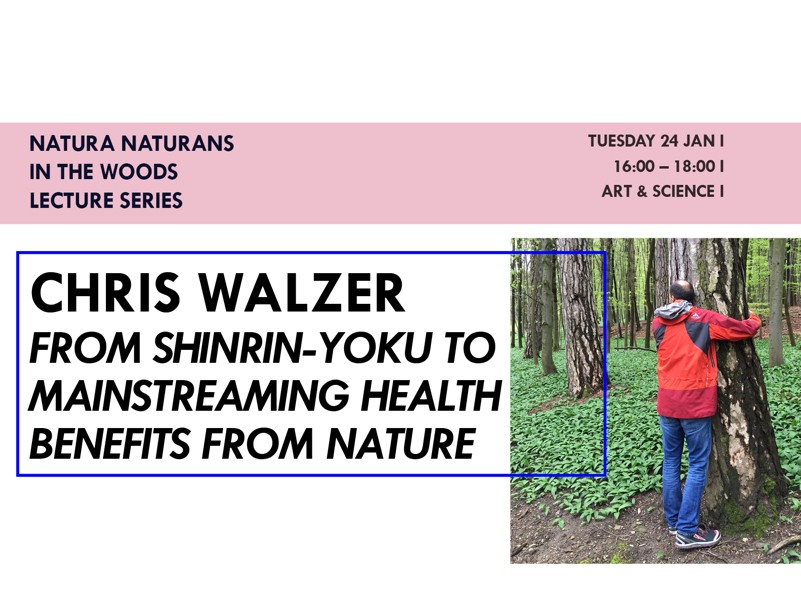
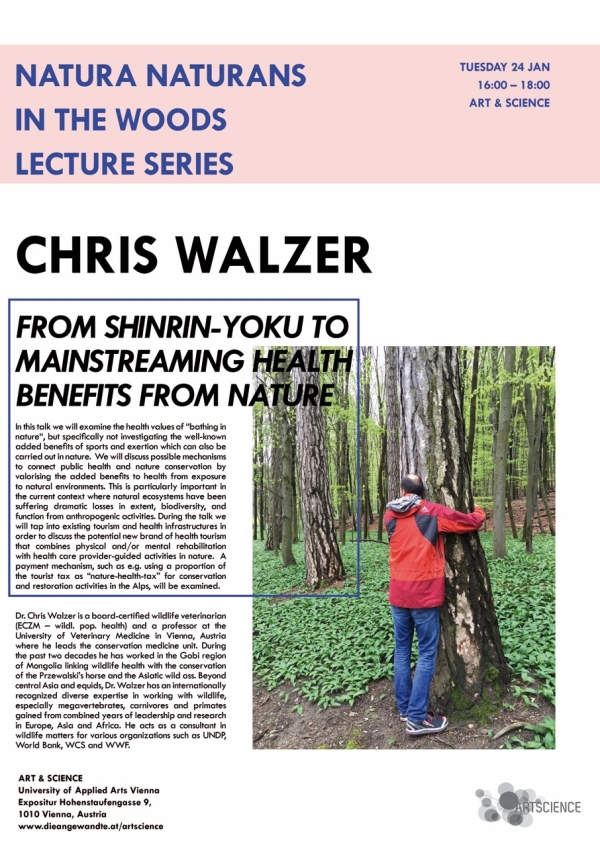
In this talk we will examine the health values of "bathing in nature“, but specifically
not investigating the well-known added benefits of sports and exertion which can also be carried out in nature. We will discuss
possible mechanisms to connect public health and nature conservation by valorising the added benefits to health from exposure
to natural environments. This is particularly important in the current context where natural ecosystems have been suffering
dramatic losses in extent, biodiversity, and function from anthropogenic activities. During the talk we will tap into existing
tourism and health infrastructures in order to discuss the potential new brand of health tourism that combines physical and/or
mental rehabilitation with health care provider-guided activities in nature. A payment mechanism, such as e.g. using
a proportion of the tourist tax as “nature-health-tax” for conservation and restoration activities in the Alps, will be examined.
Dr. Chris Walzer is a board-certified wildlife veterinarian (ECZM – wildl. pop. health) and tenured university professor
at the University of Veterinary Medicine in Vienna, Austria where he leads the conservation medicine unit. During the past
two decades he has worked in the Gobi region of Mongolia linking wildlife health with the conservation of the Przewalski’s
horse and the Asiatic wild ass. Beyond central Asia and equids, Dr. Walzer has an internationally recognized diverse expertise
in working with wildlife, especially megavertebrates, carnivores and primates gained from combined years of leadership and
research in Europe, Asia and Africa. He acts as a consultant in wildlife matters for various organizations such as UNDP, World
Bank, WCS and WWF. Dr. Walzer has authored more than 70 peer-reviewed research publications, numerous book chapters and lectures
widely in the field of wildlife health and biodiversity conservation. Over the past decade he has additionally lead several
successful large-scale EU-funded ecological connectivity and biodiversity conservation projects in the Alps. Dr. Walzer is
the recipient of several research and service awards most notably the Distinguished Environmentalist Award from the Mongolian
Ministry of Nature and Environment for contributions to the conservation of Mongolia's rare and endangered species.
NATURA NATURANS – IN THE WOODS // Lecture series
Which ingredients are necessary to transform Nature into ‘Natura naturans’–a
place wherein bodies strive to enhance their power of activity by forging alliances with other bodies in their vicinity? (Bennett,
J. on Spinoza, 2004)
Presumably, the notion of matter has to change: instead of postulating inanimate matter which does
nothing more than composing the world out of long concatenations of cause and effect where nothing is supposed to happen (Latour,
B. 2010), a “new materialism” installs freedom, movement, creativity in the very heart of things. What tools might be appropriate
to realise this conceptual change from passive to active matter, to transport various kinds of ingredients into the motley
arena of things? Transport and transportation need mediators that import and export and thus traverse. Metaphor, in facts,
means “transport“. And this is a (research)question:
Can metaphors act as mediators for transportation? Like Gaia, mediators
can be human and non-human things that invent but also can betray, that nourish, but also can be mistaken. Transportation
(metaphors) can be the craziest and the most certain – metaphors as messenger create contradiction and foreignness/otherness
that may be the route to invention. (Serres, M., 1995)
This module explores the transdisciplinary conditions for transportations
and their consequences for invention. We meet in the woods, this proud and humble emblem of nature. And there is a method:
“Research in the wild” aims at exploring actors and active entities that populate this emblematic site. Point of departure
of Research in the Wild: the wood as a polluted, impure, composite reality, and, secluded research in laboratories that risks
paralysis if it refuses to cooperate with research in the wild. (Callon, M., Rabeharisoa, V., 2003) And there is a caveat:
when “first” Nature (and the hegemony of scientific knowledge that claims to define that “first” nature for its own part)
starts to lose its monopoly (see e.g. “multinaturalism”), it seems to be fair to distrust a “second” Nature: Economy as the
universal dialect of a globalised world, and, to avoid believing that the Economy would supply “the unsurpassable horizon”
of investigation and nevertheless respect what informants say about the troubles with subsistence.
There is an aim: to
explore and chart a site-specific transdisciplinary trajectory of metaphors: a model of the fictional existence of a forest
area. A time-based chart that encompasses the multiplication of goods and bads, the production and following organisational
scripts, the exploration of the links between ends and means, the
risks of reproduction. A chart that “animates”.
See also:
www.dieangewandte.at/artscience