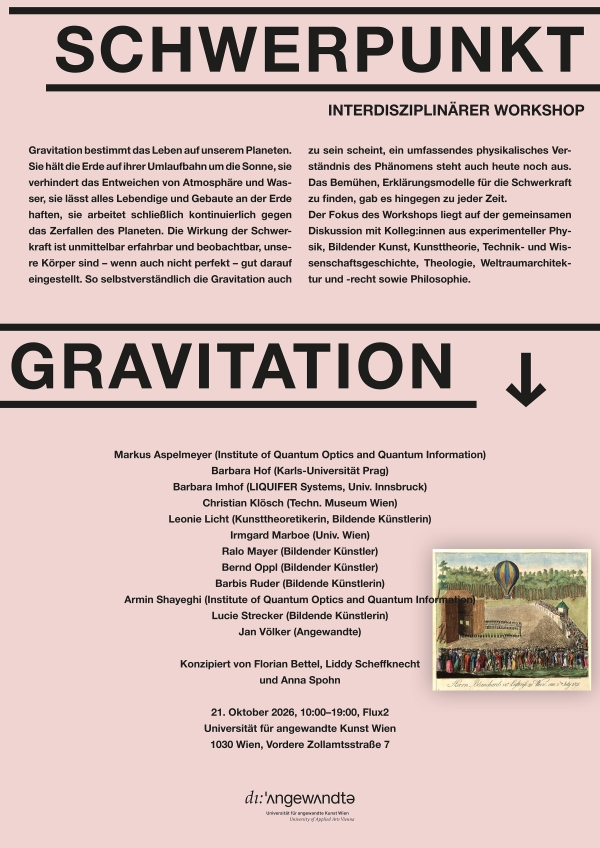
Gravity
shapes life on our planet. It keeps the Earth in its orbit around the Sun; it prevents the atmosphere and water from escaping;
it keeps all living things and man-made structures anchored to the Earth; and, ultimately, it works continuously to prevent
the planet from falling apart. The effects of gravity can be experienced and observed directly; our bodies are – though not
perfectly – well adapted to this phenomenon. However self-evident gravity may seem, a comprehensive physical understanding
of the phenomenon is still lacking today. Efforts to find explanatory models for gravity, however, have existed throughout
history.
So whilst we may lack a definitive understanding of gravity,
we can observe and feel its effects all the more clearly in our everyday lives. Despite – or perhaps precisely because of
– this inescapable earthly anchorage, the idea of escaping gravity and experiencing flight, levitation and weightlessness
has always held a certain appeal. Whilst breaking free from the Earth was long considered the preserve of fairy tales, myths,
religion and superstition – or the domain of other living creatures such as insects, jellyfish and birds – this changed rapidly
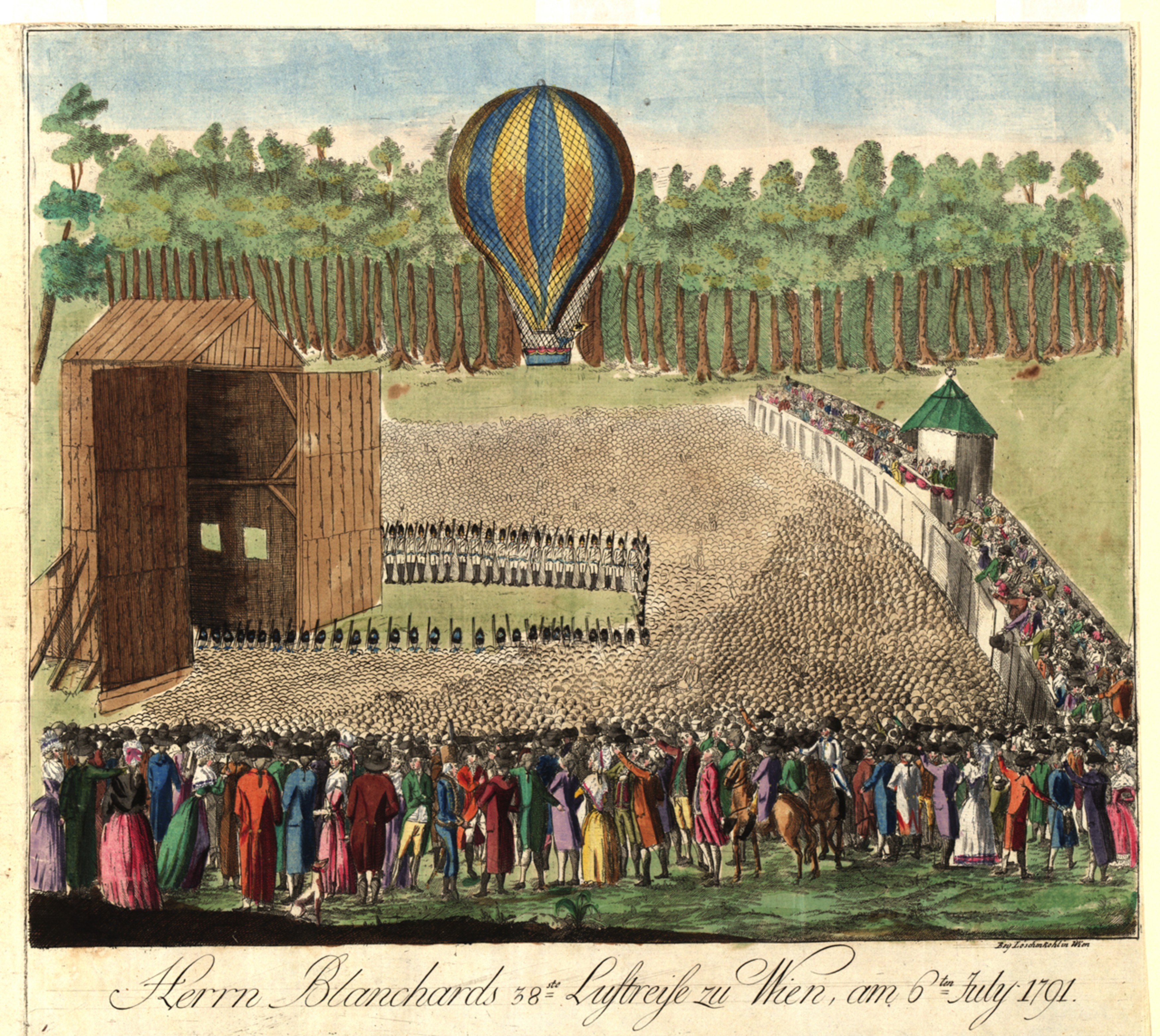
as the skies became a realm of the mundane and the sciences turned their attention to the atmosphere. In 1783, the first humans
took to the skies in a hot-air balloon; less than two hundred years later, humans flew to the Moon and were able to experience
weightlessness first-hand. Today, space travel beckons with the promise that anyone can enjoy the sensation of floating and
visit space in the future. With the rapid development of commercial space travel and the associated fantasies of mining raw
materials, coupled with the simultaneous withdrawal of state institutions, contemporary art increasingly features works that
critically reflect on our presence in space, imagine altered forms of gravity, or specifically investigate weightlessness.
The workshop focuses on collaborative discussions with colleagues from the fields of experimental physics, the visual
arts, art theory, the history of technology and science, theology, space architecture and law, and philosophy.
With
the participation of:
Markus Aspelmeyer (Institute of Quantum Optics and Quantum Information)
Barbara
Hof (Karls University Prague)
Barbara Imhof (LIQUIFER Systems, University of Innsbruck)
Christian Klösch (Vienna Technical Museum)
Leonie Licht (art theorist, visual artist)
Irmgard Marboe (University of Vienna)
Ralo Mayer (visual artist)
Bernd
Oppl (visual artist)
Barbis Ruder (visual artist)
Armin Shayeghi (Institute
of Quantum Optics and Quantum Information)
Lucie Strecker (visual artist)
Jan Völker
(University of Applied Arts Vienna)
An event organised by the Department of Cultural Studies, conceived and
organised by Florian Bettel, Liddy Scheffknecht and Anna Spohn.