The Wetness of Hacking
Transhacking Feminist Perspectives from Wetlab
Barcelona
Angewandte
Interdisciplinary Lab
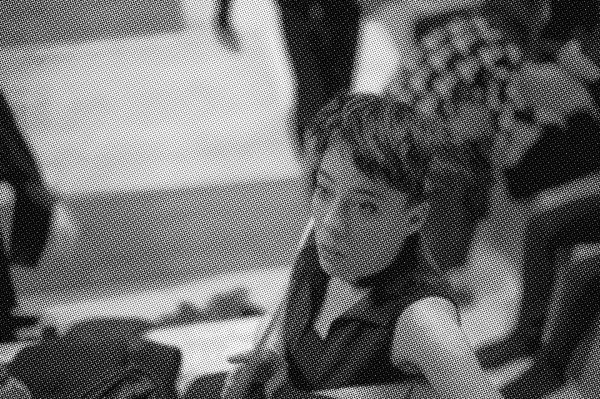
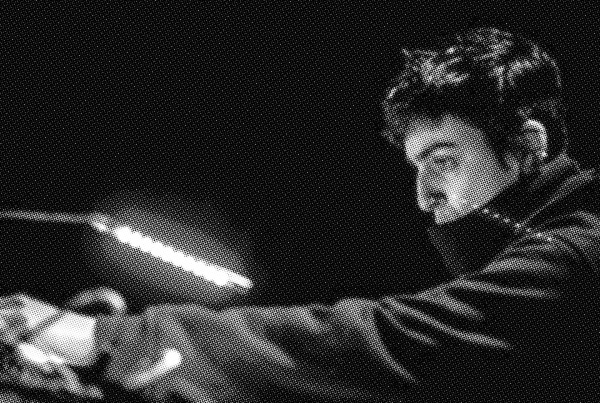
Artist Talk by Gaia Leandra and Ce Quimera (Wetlab) / Moderation by Patricia J. Reis
and Stefanie Wuschitz (Mz* Baltazar’s Laboratory).
Gaia Leandra and Ce Quimera, currently artists
in residence at Hangar’s wetlab in Barcelona, will present their artistic work and the projects developed at the well-known
bioart laboratory.
Since 2021 they have been carrying out Bioxeno, a project that aims to generate new narratives at
the intersection of science and art, using different tools, techniques, disciplines and practices. They understand bioart
as a place of strength, taking a critical point of view to the movement of knowledge and its scientific production. The project
was inspired by Lynn Margullis, who studied microorganisms in the ecosystem of the Catalunya territory for several years.
By establishing interspecies relations with bacterial communities, specifically the cyanobacteria of the Ebro Delta (Catalunya,
Spain), and by taking into account our human limitations and the need for technology to mediate interspecies relations, the
outset of their research questions will be:
Which artistic formats could show/translate this type of link without reproducing
anthropocentric or colonial views? How to account for biodiversity and the extractivism present in the ecosystems we inhabit?
In what ways do we think of the bio as life? How do we think of our lives? Or rather, how do we live them?
In these present
times, when catastrophe and disaster seem to be the only possible scenarios for the near future and visible eco-social alternatives
seem to have come to an end, Gaia Leandra and Ce Quimera think it is crucial to generate new narratives, new stories about
possible livable futures that can challenge our present ways of living and how we relate to each other and to the other living
beings that inhabit planet Earth.
What is a wetlab? Which bodies inhabit it? Which kind of technologies do we work with
in a laboratory? Are they the same we work with in the wetlab? Do these technologies, which we call living technologies, have
a specificity of their own? If the wetlab generates knowledge, practices and experiences from a transhackfeminist point of
view, how do we understand transhackfeminism?
If what matters to us are the ways in which we do things, and we understand
transhackfeminism as a multiplicity of methods, how do we incorporate aspects of care in these practices? How do we deal with
the relationships between human and nonhuman beings? How do pollution and the transmission of knowledge operate in this ecosystem?
We will give a short introduction to the artists, their artistic works, the projects we are currently developing at wetlab
and the processes and organisms that inhabit the space.
The research into bioart is closely linked to Hangar’s wetlab.
Based on a transhackfeminist vision, wetlab is a space where hybrid interactions take place that disrupt the boundaries generally
established between art and science, while also informing a critical revision of science as an institution. Workshops, presentations,
research residences, collective work processes and discussions are carried out at the lab. In the context of the current ecological
debacle, we want to promote projects that are propositive and offer alternative perspectives in order to rethink possible
futures. The wetlab space is currently coordinated by resident artists Gaia Leandra + Ce Quimera.
Gaia Leandra
holds a degree in biology. She worked at the Institute for Microelectronics and Microsystems (IMM) of the Italian National
Research Council CNR. After university, one of her first artistic collaborations was with Paula Pin as part of the project
»Fotosintetika«. She participates in the Maker Faire (Rome). She exhibited sound work at the Flussi media arts festival in
Avellino. She also collaborates with the collective »Riot Studio« on DIY biology workshops and works with Mary Magicc’s project
»Hormons«. Together with the artist Oskar Martin, she offers workshops on sound biology and electronics. She is part of the
Italian collective »Merda Elettronica«. She teaches DIY synth workshops together with artist Corazón de Robota. She curates
independent music festivals such as FTS, Multiversal, Ràdio Black Out and TPA I 76A Napolitan squatt. From 2020 until 2022,
she is part of the art collective residing at Hangar’s Wetlab in Barcelona.
Ce Quimera is Artist and researcher,
born in Argentina and resident in Europe since 2000, living between Barcelona and Bourges. She studied Social Anthropology
in Buenos Aires while doing internships in the performing arts field.
In 2008, she created the lab Quimera Rosa together
with Kina Madno. From this point on, she focused her corporal and investigative work on post-identity gender policies and
corporal, identity and technoscience experiments with a trans*feminist perspective.
Her work currently focuses on the
development of performances, transdisciplinary projects and interactive installations as well as elaborate devices that function
through corporal activity and experimentation in biohacking. Her work is characterized by long periods of research/experimentation,
generally as part of residencies. In 2016, she began working with Quimera Rosa on the project Trans*Plant, carried out and
produced by Ars Electrónica and the European Media Artists in Residence Exchange (EMARE), Hangar and the Barcelona Biomedical
Research Park (PRBB), the University of California in Davis and L'Antre Peaux. In 2019, she participated in Acá soy la que
se fue: relatos sudakas en la Europa fortaleza, a pioneer collection of real stories of and for migrants arriving in Europe
from Abya Yala and the Caribbean. She is artist in residence at the Hangar Wetlab, together with Gaia Leandra (2020/2022),
where she carries out investigative and experimental projects in art and science with a transhackfeminist vision. Most of
her work is collaborative and free of patents and ownership codes and has been presented in streets, galleries, universities,
freelance spaces, okupas, art centres, festivals and museums.
SUPPORTERS: Institut ramon llull,
Government of Catalonia (Delegation to Central Europe)
Bioxeno project has had the support of the “Premios Barcelona
2020” Grants from the Barcelona City Council and with the support of Hangar.org for our two-year residency at the wetlab (Gaia
Leandra + Ce Quimera 2020-2022).
PARTNERS: Mz* Baltazar´s Laboratory