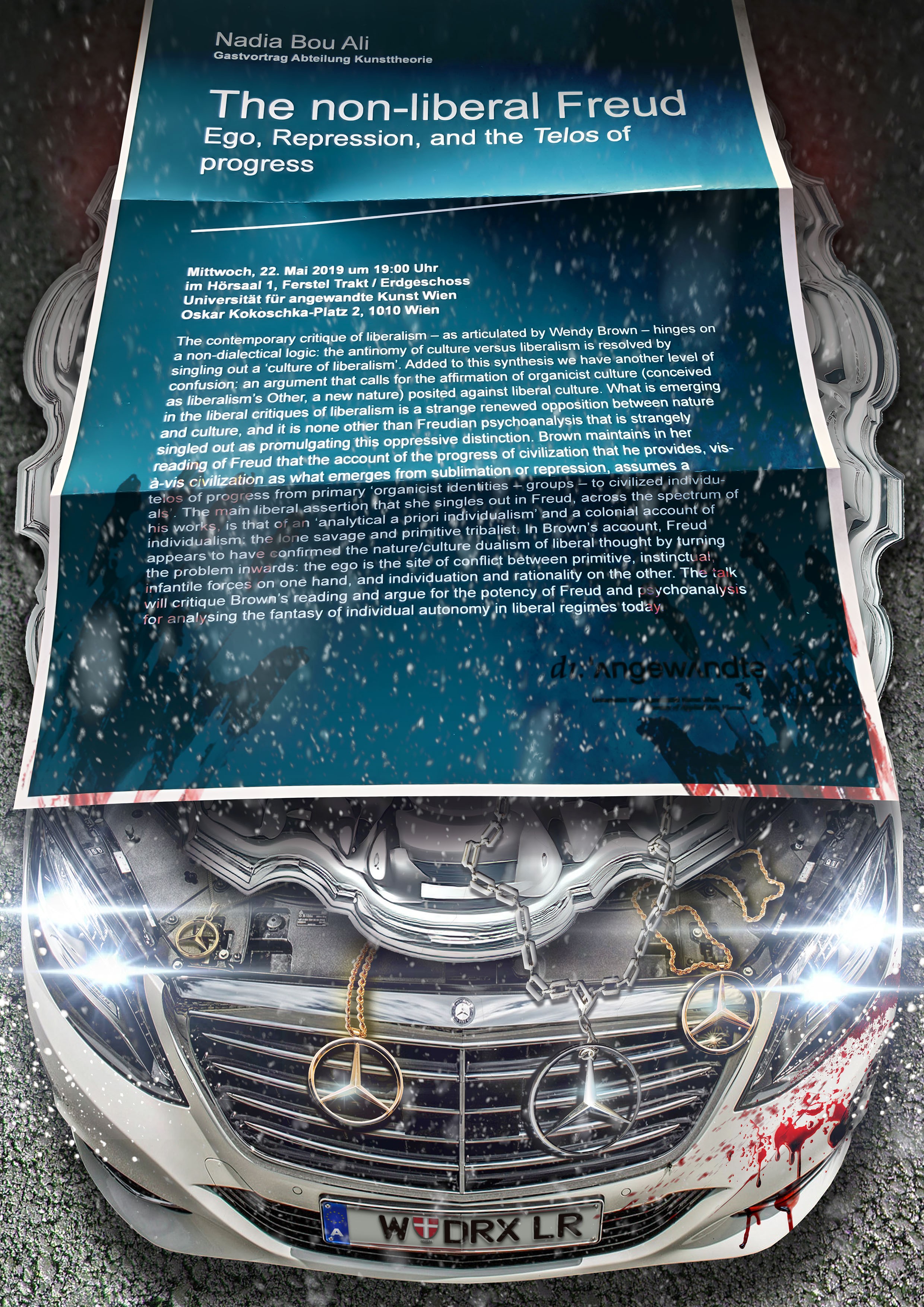
Nadia Bou Ali: The non-liberal Freud
Ego, Repression, and the Telos
of progress
The contemporary
critique of liberalism - as articulated by Wendy Brown - hinges on a non-dialectical logic: the antinomy of culture versus
liberalism is resolved by singling out a 'culture of liberalism'. Added to this synthesis we have another level of confusion:
an argument that calls for the affirmation of organicist culture (conceived as liberalism's Other, a new nature) posited against
liberal culture.
What is emerging in the liberal critiques of liberalism is a strange renewed
opposition between nature and culture, and it is none other than Freudian psychoanalysis that is strangely singled out as
promulgating this oppressive distinction. Brown maintains in her reading of Freud that the account of the progress of civilization
that he provides, vis-à-vis civilization as what emerges from sublimation or repression, assumes a telos of progress from
primary 'organicist identities-groups-to civilized individuals'. The main liberal assertion that she singles out in Freud,
across the spectrum of his works, is that of an 'analytical a priori individualism' and a colonial account of individualism:
the lone savage and primitive tribalist. In Brown's account, Freud appears to have confirmed the nature/culture dualism of
liberal thought by turning the problem inwards: the ego is the site of conflict between primitive, instinctual, infantile
forces on one hand, and individuation and rationality on the other. The talk will critique Brown's reading and argue for the
potency of Freud and psychoanalysis for analysing the fantasy of individual autonomy in liberal regimes today.