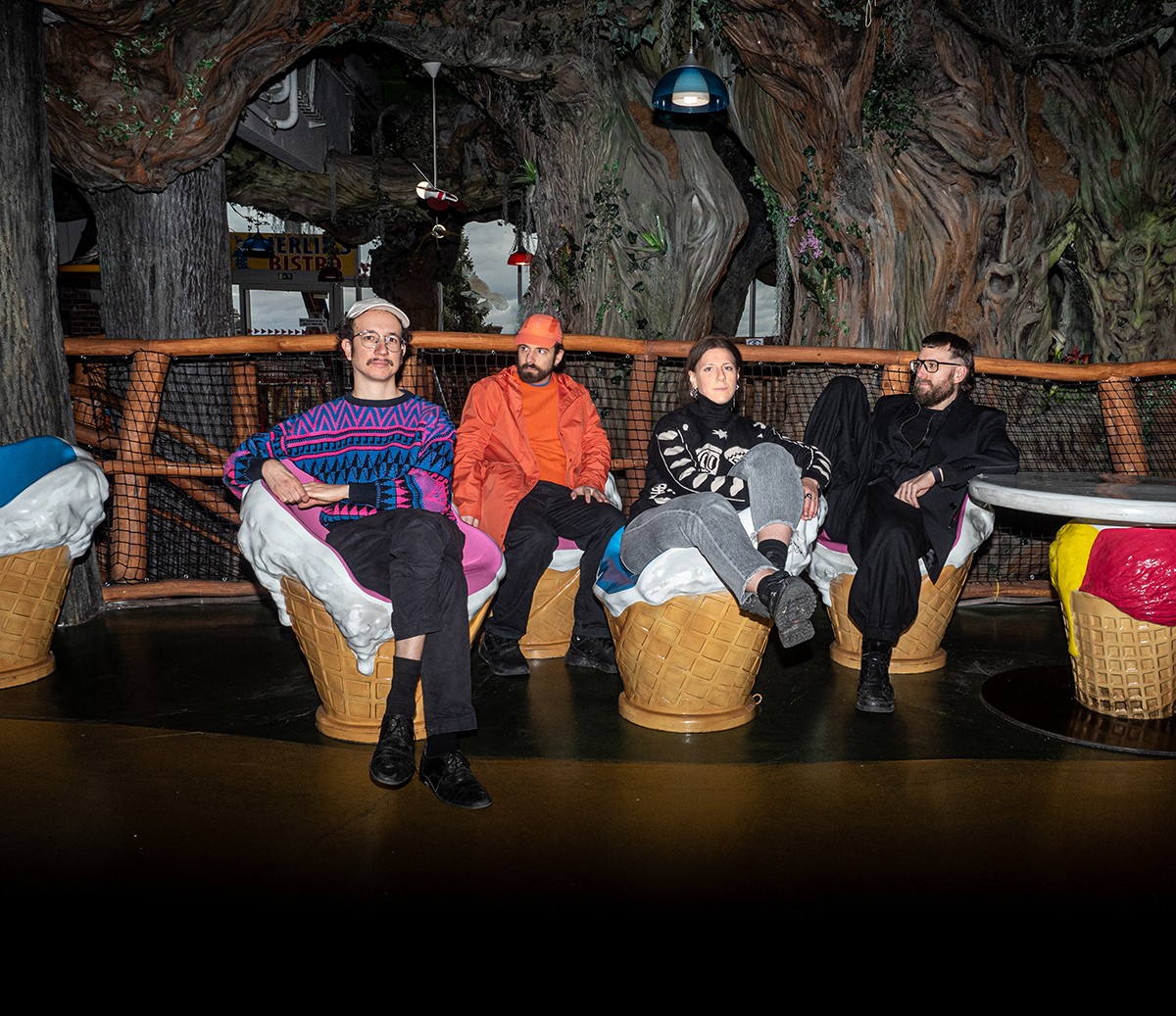
Statement by TOTAL REFUSAL
Cracking Corporate Reality
Eine Veranstaltung der Abteilung Ortsbezogene
Kunst
Total Refusal's lecture investigates the phantasm of public space in open-world video
games. Titles like Watch Dogs, The Division, and GTA V present meticulously crafted pastiches of
real cities such as London, New York, and Los Angeles. Yet, these digital worlds represent an escalation of the corporate
reality they simulate. As public spaces and workplaces in our physical reality become increasingly gamified, digital game
spaces inversely become a model for the physical, upending the traditional dynamic where the real world was the blueprint
for the digital.
This logic mirrors that of real-world Business
Improvement Districts (BIDs), where security and property value dictate the use of space, all while cosplaying as open
cityscapes. In-game, this control manifests through hollow, inaccessible buildings, non-player characters looping limited
performative actions, and hidden rules that nudge players toward anticipated behaviors. The digital city is not a playground
for free exploration but a controlled simulation of public space, where player agency is limited to a narrow set of pre-approved
actions and the world is rarely multiperspectival or user-generated.
This controlled experience has historical
roots in colonialist Western landscape design. The boundaries of game maps are not mere fictional borders but carefully crafted
illusions, akin to the "ha-ha" walls in Romantic and Baroque gardens. Just as these gardens were playgrounds for the ruling
class—where peasants were incorporated as decorative elements—the video game landscape is a curated experience. Ruins are
artificially placed, and architecture serves a predetermined "environmental storytelling" function.
This stands
in stark contrast to the ideas of the Situationist International, who sought to question the hierarchical and repressive
urban realm. They championed détournement—the repurposing of urban elements—and psychogeography, a self-chosen, drifting exploration
of the city. Projects like Constant Nieuwenhuys' "New Babylon" envisioned the city as a true "arena of play," a free surface
designed to generate unpredictable games and erase capitalist domination. It is the utopian version of what game maps later
have become.
Video games, however, remain a "game" with fixed rules, not free "play." While modding and artistic
interventions become something more collective, they remain semi-public simulations. Ultimately, these digital realms are
top-down, corporate, and securitized investment products—which, precisely for this reason, invite us to misuse, appropriate,
and subvert them.
Website TOTAL REFUSAL
Website
Ortsbezogene Kunst